
Trying to decide between a toy hauler and an enclosed cargo trailer? Both haul ATVs, UTVs, motorcycles, and gear. Both have ramp doors. From the outside they look similar. Inside, they’re built for completely different jobs — and choosing the wrong one wastes thousands of dollars and kills your weekends. This guide breaks down toy hauler vs enclosed cargo head-to-head: cost, features, comfort, weight, and which one fits your actual use case.
The Core Difference Between Toy Hauler vs Enclosed Cargo
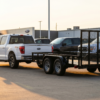
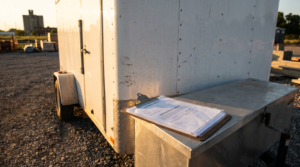
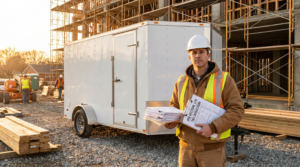
An enclosed cargo trailer is a steel or aluminum box on a trailer chassis built to haul stuff. Empty interior, ramp door, basic ventilation, no living space. Designed for transport, not occupation. Costs $5,000–$25,000 depending on size.
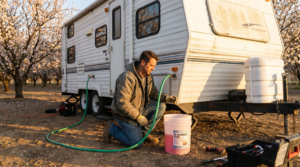
A toy hauler is an RV with a garage. Living space (kitchen, bath, beds) up front, separated from a rear garage that fits an ATV/UTV/motorcycle. Designed to haul AND sleep AND cook AND shower. Costs $25,000–$120,000 depending on size and luxury level.
The toy hauler vs enclosed cargo question is really a question of how you use the destination. If you tow to a parking lot, dump the toy, drive home — enclosed cargo. If you tow to a campground or trailhead and stay overnight — toy hauler.
Cost Comparison: Toy Hauler vs Enclosed Cargo
Here’s where most buyers get sticker shock.
Enclosed cargo trailer (8.5×20 V-nose): $10,000–$15,000 new. Add ramp door, side man door, basic 12V lighting, two roof vents. That’s all you get.
Toy hauler (8.5×32, mid-tier): $45,000–$75,000 new. Includes a kitchen, queen bed, bathroom with shower, AC, heating, water tanks, generator prep, slide-out, electric awning. Same garage space in the back.
Annual carrying cost is also dramatically different. Cargo trailer insurance: $200–$400/year. Toy hauler RV insurance: $1,200–$2,500/year. Toy hauler also requires winterizing, RV-specific maintenance, and depreciates faster than cargo.
If you’re shopping the cargo route, our enclosed trailers buyer’s guide covers sizing and brand selection. If you’re shopping the toy hauler route, see our camper trailers buyer’s guide for the RV side.
Hauling Capacity: Toy Hauler vs Enclosed Cargo
This surprises a lot of buyers. An enclosed cargo trailer hauls more weight than a similarly-sized toy hauler.
The reason: a toy hauler’s living space takes up payload. A 32-foot toy hauler with a 12-foot garage might have 4,000–6,000 lbs of cargo capacity. A 20-foot enclosed cargo trailer of the same GVWR has 6,500–9,000 lbs of cargo capacity, with the entire interior usable.
If you’re hauling a heavy side-by-side (Polaris RZR Pro XP at 1,900+ lbs) plus full fuel and gear, the cargo trailer wins on capacity. The toy hauler wins only when you need the living space too.
For specifics on payload math, see our trailer weight capacity guide.
Towing Considerations
A 20-foot enclosed cargo trailer at GVWR weighs 7,000–9,500 lbs loaded. Towable behind any half-ton or three-quarter-ton truck.
A 32-foot toy hauler at GVWR weighs 12,000–16,000 lbs loaded. Requires a heavy-duty truck (F-250 or up, ideally diesel) and almost always a fifth-wheel or gooseneck hitch. Add height: toy haulers are often 11–12 feet tall, requiring more clearance under low bridges and tree branches.
Towing fuel economy also diverges. Cargo trailer towing: 8–11 MPG. Toy hauler towing: 6–9 MPG. Over a 1,500-mile season trip, that’s $200–$400 in extra fuel for the toy hauler.
The Real Question: How Will You Use It?
The toy hauler vs enclosed cargo decision comes down to four scenarios.
Scenario 1: Day Tripping
You drive 1–3 hours each way to ride trails or race. Sleep in your truck or come home that night. Enclosed cargo trailer. Half the cost, more cargo space, no overnight comfort needed.
Scenario 2: Weekend Camping
You go out Friday afternoon and return Sunday evening. Stay at a campground or BLM land. Want a bed and a fridge but can deal with a portable bathroom. Either could work. A high-spec enclosed cargo with a built-in bunk and small kitchenette setup costs $15,000–$25,000 — splits the difference. Or buy a basic toy hauler around $30,000–$45,000 used.
Scenario 3: Snowbird / Long-Term Travel
You go for two weeks at a time, multiple times a year. Need a real bathroom, real kitchen, real bed, AC, heat. Toy hauler, no contest. Cargo trailers can’t be made livable enough for two-week stays.
Scenario 4: Mobile Business + Recreation
You haul tools weekdays for work and toys on weekends. Enclosed cargo with adapters. Toy haulers are terrible for tools — the kitchen and bathroom hurt cargo capacity and the build quality of an RV is worse for daily-driver use than a cargo trailer.
Toy Hauler vs Enclosed Cargo Side-by-Side
| Factor | Enclosed Cargo Trailer | Toy Hauler RV |
|---|---|---|
| Price (new) | $8K–$25K | $25K–$120K |
| Living space | None (DIY only) | Full RV with kitchen/bath/beds |
| Cargo capacity | Higher (full interior) | Lower (garage section only) |
| Tow vehicle | Half-ton OK | 3/4-ton or 1-ton typically |
| Insurance/yr | $200–$400 | $1,200–$2,500 |
| Depreciation | Slow (10–20% in 5 yr) | Fast (40–60% in 5 yr) |
| Maintenance | Minimal | RV-specific (water lines, propane, slide-outs) |
| Best use case | Day trips, work, transport | Multi-night camping with toys |
Hybrid Option: DIY Cargo-to-Camper Conversion
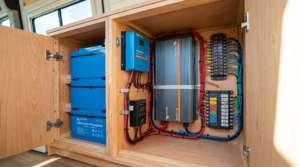
A growing trend in the toy hauler vs enclosed cargo decision is the DIY conversion. Buy a basic enclosed cargo trailer (8.5×20 typically) and outfit the front 8 feet with a folding bed, mini-kitchen, portable toilet, and 200 Ah lithium battery. Total cost: $20,000–$35,000 including the trailer.
Pros: half the cost of a comparable toy hauler. Easier to maintain. Better for off-grid because of higher cargo capacity for water, fuel, gear. No RV-specific failure points.
Cons: lower resale than a factory toy hauler. Insurance is trickier (you have to get the conversion documented). Less polished feel than a factory RV interior.
Our enclosed trailer outfitting guide covers many of the same systems used in DIY camper builds.
Resale Reality
Resale is the dirty secret of the toy hauler vs enclosed cargo comparison.
An 8.5×20 enclosed cargo trailer holds 80–90 percent of its purchase price for the first three years. Brand-name builds (Big Tex, BWise, CAM) hold value because the market for cargo trailers is steady, used inventory is tight, and they’re functionally identical year over year.
A toy hauler RV loses 20–30 percent in year one alone. Year-five values typically run 40–50 percent of new. New model years drop the previous year’s prices fast.
If you might sell within 5 years, the cargo trailer is the better financial bet — even if the toy hauler costs more upfront.
Outbound References
For RV-specific weight standards (relevant if you’re going the toy hauler route), the FMVSS standards for recreational vehicles apply. For trailer cargo securement (always relevant), the federal FMCSA 49 CFR 393.100 standard governs both.
Common Questions About Toy Hauler vs Enclosed Cargo
Can I sleep in an enclosed cargo trailer?
Yes, with a foldable bed, fan, and basic insulation. Many ATV racers do exactly this for weekend events. It’s not luxurious but it works.
Are toy haulers waterproof for off-road conditions?
Most toy haulers are NOT designed for sustained off-road use. Slide-outs and roof seams are vulnerable. Park them at the trailhead, not down a forest road.
Can I park a toy hauler at a regular RV park?
Yes — most RV parks accept toy haulers and have full hookups (30A or 50A power, water, sewer). Some don’t allow ATVs/UTVs to be ridden in the park itself, only stored.
Which holds value better for resale?
Enclosed cargo trailer, by a significant margin. Toy haulers are RVs, and RVs depreciate fast.
What’s the best size for a toy hauler vs enclosed cargo first-time buyer?
For cargo: 8.5×20 V-nose covers most needs. For toy hauler: 8.5×28 or 8.5×32 with a 12–14 foot garage. Smaller toy haulers feel cramped fast.
Ready to Buy?
The toy hauler vs enclosed cargo decision is fundamentally about how often you’ll sleep at the destination. If it’s rare, save money and buy cargo. If it’s frequent, pay the premium for a real RV.
Browse enclosed trailers for sale if cargo is the right pick. For the toy hauler route, see our camper trailers buyer’s guide. Either way, our enclosed trailer security guide applies to both — protect what you tow.
Request a free delivered quote for either build and we’ll send out-the-door pricing within one business day. Free delivery to all 50 states from PrimeLoad Trailers.