Looking for contractor trailers for sale? You’ve found one of the largest online lineups in America, with free delivery to all 50 states. This guide walks you through every detail you need before you buy, from sizes and lift mechanisms to 2026 pricing and brand reputations.
Contractor Trailers For Sale in 2026: What Smart Buyers Watch For
The trailer industry has shifted under buyers’ feet over the last three years. Anyone shopping contractor trailers for sale in 2026 faces more transparent pricing, better delivery logistics, and bigger spec sheets than ever. The federal FMCSA CDL rules for towing have not changed (no CDL needed under 26,001 lbs combined GVWR), but how dealers package contractor trailers for sale listings has. Free nationwide delivery, side-by-side spec comparisons, and out-the-door pricing are now the norm at any reputable dealer. Don’t accept anything less.
Brand selection matters too. The NHTSA tire safety standards govern how every trailer-rated tire performs at GVWR; brands that buy lower-rated tires to hit a price point are easy to spot once you know what to look for. Whether you’re a first-time buyer or your fifth purchase, finding the right contractor trailers for sale comes down to two things: matching capacity to use and trusting the brand to back the build. This guide walks you through every variable that matters before you sign.
nn
If you run a crew, your trailer is your second shop. It rolls out at 6 a.m., sits at the curb all day, gets locked up at 5, and either makes your day smoother or eats an hour of your time looking for the right cordless. Picking the right contractor trailer is one of the biggest productivity decisions a trade business makes, and the difference between a smart spec and a regret usually comes down to sizing, outfitting, and choosing a build that fits the actual work.
PrimeLoad has been doing this for 15 years out of Woodland, WA. We keep around 20 contractor trailers in stock at any given time, we deliver free to all 50 states, and we have helped landscapers, plumbers, electricians, and general contractors spec the right rig for what they actually do. This guide walks you through every decision in plain language, so you walk into your purchase knowing what to ask.
What Counts as a Contractor Trailer
A contractor trailer is the working cousin of the standard cargo trailer. The shell is similar. The intent is different. Where a basic cargo trailer is a closed box on wheels, a contractor trailer arrives outfitted, or pre-wired to be outfitted, for a working trade. That overlap can blur the line at a dealer lot, so here is how to read the difference.
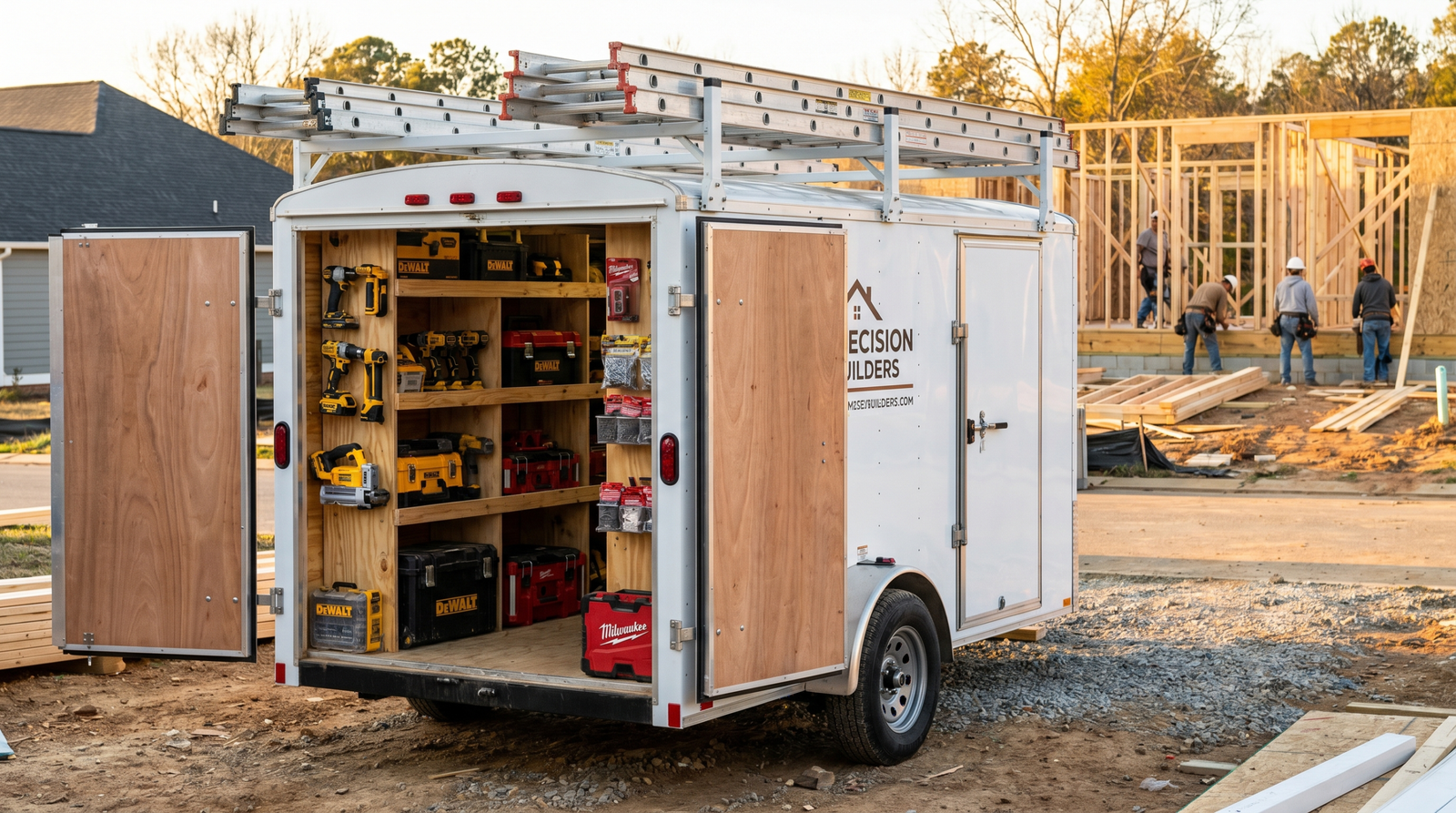
A cargo trailer is built to move things from point A to point B. A contractor trailer is built to be the jobsite for the day. The walls support tools and shelving. The interior has tie-downs in useful spots. The doors lock down hard because the box holds five figures of equipment overnight. Many include exterior racks for ladders, lumber, and conduit so you can fit a 24-foot extension ladder without losing interior space.
An equipment trailer is the open deck cousin used for skid steers, mini excavators, and stand-on landscape gear. Some contractors run both. A roofer might haul shingles and a tear-off dumpster on an open deck while keeping nail guns and compressors locked in an enclosed contractor trailer parked nearby.
Here are the features that distinguish a true contractor build from a basic cargo box:
- Interior storage organization (shelving, drawers, pegboard walls, tool cabinets)
- Heavy-duty lockable doors with deadbolts, hidden hinges, or puck locks
- Exterior racks for ladders, lumber, conduit, or pipe
- Extra interior height for tall fixtures, water heaters, or standing comfortably
- Reinforced floor and walls for repeated drag-loading of tools
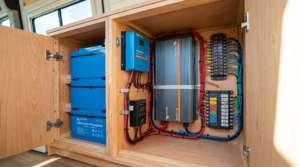
- Pre-wired interior for 110V shore power, LED lighting, and battery banks
If a trailer has the structural bones plus at least three of those outfitting elements, you are looking at a contractor trailer. Browse what we have ready to ship at our contractor trailer category.
Open Contractor Trailer vs Enclosed Contractor Trailer
The first big fork in the road is open or enclosed. Both work. They serve different trades.
Enclosed contractor trailer
An enclosed trailer is a steel or aluminum box that locks. Tools stay dry, stay hidden from the street, and stay secure overnight. For trades carrying $20,000 to $80,000 in tools, this is almost always the right call. Plumbers, electricians, HVAC techs, finish carpenters, painters, flooring crews, and mobile mechanics all run enclosed because their tools are expensive, sensitive to weather, and stolen often when left visible.
Cost runs higher. A 7×14 enclosed contractor trailer typically lands between $9,500 and $14,500 depending on options. The payoff is theft prevention, weather protection, year-round use without tarping, and a rolling storefront if you wrap it with your business graphics.
Open contractor trailer
An open landscape or utility trailer with a contractor package wins on speed. Walls are low or absent. Loading is fast. The deck handles dirty, wet, or oversized loads that would trash an enclosed interior. Landscapers, demolition crews, and small site work outfits often run open because mowers, wheelbarrows, debris, and 4×8 sheets of plywood all load quicker without doors in the way.
Cost runs lower. A solid 6×12 open contractor trailer with a mesh gate and side rails sits in the $3,500 to $6,500 range. The tradeoff is theft exposure overnight, no weather protection, and tools have to come off the trailer at the end of every day or live in lockboxes mounted to the deck.
How to choose
If you store tools on the trailer overnight, go enclosed. If you only haul during the work shift and the gear sleeps in your shop, an open trailer saves money and loads faster. Many trades that started open eventually move to enclosed when their tool inventory grows past $15,000. The math on a single stolen toolbox usually pays for the upgrade.
Contractor Trailer Sizes
Picking a size is the most expensive decision people get wrong. Too small and you grow out of it in 18 months. Too big and you tow a half-empty box around for years. Here is what fits in each common size.
5×8 (single axle, around 2,000 lb GVWR)
This is solo handyman territory. A 5×8 fits a small generator, two toolboxes, a stepladder, and a few power tools. Towable behind a midsize SUV. Good for one-person service work like appliance repair, locksmithing, or a side-hustle handyman doing punch lists. Not enough for a real crew.
6×12 (single axle, 2,990 lb GVWR)
The classic small-business size. A 6×12 holds enough tools for a two-person crew: corded and cordless tools, a small compressor, three or four totes, hand tools, and roughly 200 square feet of finish material. Solo painters, electricians starting out, and one-truck plumbing operations love this size because almost any half-ton truck can pull it loaded.
7×14 (tandem axle, 7,000 lb GVWR)
The sweet spot for most trades. A 7×14 fits a 24-foot extension ladder on the roof rack, a full miter saw station, a job box, three to five sets of cordless platforms, ductwork or rough plumbing materials, and still leaves walking room for a person to grab tools. Mid-size HVAC, electrical, and remodeling crews land here. Our Car Mate 7×14 Contractor is a popular pick at this size, and the slightly different Car Mate 7×14 Enclosed Cargo works well for crews that want to add their own outfitting.
7×16 (tandem axle, 7,000 lb GVWR)
Two extra feet of length matters more than you think. The 7×16 fits everything in a 7×14 plus a workbench across the front wall, longer materials like 12-foot trim, and a second job box without crowding. Painters, flooring crews, and HVAC change-outs benefit from this length.
8.5×16 (tandem axle, 9,990 lb GVWR)
The 8.5-foot width is the upgrade most growing crews wish they had bought from the start. You can park two ATVs side by side, store a finished workbench across the front, and walk between full-depth shelving on both walls. GCs, framers, and full-service remodelers benefit from the extra width because materials like cabinets and 4×8 sheets fit flat without angling.
8.5×20 (tandem axle, 9,990 lb GVWR)
This is full general contractor operation territory. An 8.5×20 fits a complete remodel package: cabinets, appliances, flooring, trim, paint, and the entire tool inventory for a four to six person crew. It also fits a stand-on mower, a walk-behind, blowers, and trimmers for a commercial landscape route. Tow capacity matters at this size. You need a three-quarter-ton truck minimum, and most owners run a one-ton diesel.
For loads that exceed even the 8.5×20, consider a gooseneck. The white gooseneck trailer we carry handles full 28-to-32-foot enclosed loads with much better towing manners than a bumper-pull at the same length.
Best Trades by Trailer Type
Here is what we recommend after 15 years of matching trades to trailers.
- Landscaping: Open 6×12 or 7×14 with a mesh gate, side rails, and trimmer racks for solo and two-person crews. Step up to a 7×16 dump or 8.5×18 enclosed for full-route commercial work. Read our landscape dump sizing guide if you also haul debris and mulch.
- Plumbing: Enclosed 7×14 with full shelving, a parts bin wall, water heater rack, and a 110V outlet for charging. The 76-inch interior height matters because water heaters and tall fixtures load standing up.
- Electrical: Enclosed 7×14 or 7×16 with conduit racks, wire spool holders, and tall pegboard walls. Add a 4-foot exterior conduit rack for 10-foot lengths.
- HVAC: Enclosed 7×16 or 8.5×16 with shelving for furnaces and condensers, recovery machine mount, refrigerant cylinder racks with chains, and a generator mount for jobsite power.
- Painting: Enclosed 6×12 or 7×14 with shelving for paint cases, sprayer mounts, drop cloth bins, and a finished interior so dust does not contaminate fresh work.
- Flooring: Enclosed 7×16 or 8.5×16. You need length for hardwood and tile boxes plus width to avoid stacking awkwardly. Reinforced floor for stacked tile pallets.
- Framing: 7×16 enclosed or open with a roof-mounted lumber rack. Framers carry compressors, nail guns, saws, and need exterior storage for 16-foot studs.
- Roofing: Open dump trailer for tear-off plus an enclosed contractor trailer for tools and unopened bundles staging.
- Mobile mechanic: Enclosed 7×14 or 8.5×16 with workbench, vise, generator mount, air compressor mount, and oil drain bin storage. We have a full mobile mechanic trailer setup guide on the build details.
- Mobile detailing: Enclosed 6×12 or 7×14 with a 50-gallon water tank, pressure washer mount, generator, and shore power inlet for charging buffers.
Interior Outfitting Options
An empty trailer is a starting point. Outfitting is where the trailer becomes useful. Here are the upgrades worth pricing.
Adjustable wall shelving. E-track or slat-wall systems let you reconfigure shelves as your gear changes. Plan on $400 to $900 for a full wall.
Roof-mounted ladder rack. A flush ladder rack with a walk-on roof carries 24-foot ladders, conduit, and lumber without losing interior space. Add $600 to $1,200.
Generator box. A vented exterior generator box keeps fumes outside and the genset locked. $400 to $800 installed.
Tool drawer cabinets. Stationary or rolling cabinets bolted to the floor give you a real shop drawer experience. $700 to $2,000 depending on quality.
Water tank mount. For mobile detailing or dust suppression, a 50 to 100 gallon poly tank with strap mounts adds about $300 plus the tank.
Workbench. A fold-down or fixed workbench across the front wall turns the trailer into a working shop. $200 to $600.
Finished interior. White or gray composite walls instead of bare plywood. Easier to clean, brighter inside, looks more professional. Add $700 to $1,500.
RV-style entry door. A 32-inch RV door with a screen and built-in window lets you walk in without dropping the rear ramp. Worth every dollar of the $400 upcharge if you grab tools all day.
Top Brands Compared
We carry six brands at PrimeLoad because no single manufacturer is best for every trade. Here is how we steer customers between them.
Car Mate
Pennsylvania-built. Heavy commercial duty. Car Mate is our top recommendation for full-time commercial trades because the wall thickness, frame gauge, and door hardware survive daily abuse. Pricing runs higher than economy brands but the trailers last 12 to 15 years in commercial service. Best for plumbing, electrical, HVAC, and remodeling crews.
Haulmark
One of the original commercial-grade brands in the country. Haulmark builds trailers similar in quality to Car Mate with strong dealer parts support nationwide. Good choice if you want commercial duty plus widespread service availability for warranty work.
Carry On
Value-tier commercial. Carry On runs about 15 to 25 percent cheaper than Car Mate at similar sizes. Build is lighter but adequate for trades that do not run the trailer hard every day. Best for part-time crews, side businesses, and trades that load light.
Diamond Cargo
Georgia-built. Diamond Cargo offers a strong middle ground between Carry On value and Car Mate commercial duty. Good fit and finish, lots of customization options, popular with detailers and mobile service businesses that want a clean-looking trailer.
BWise
Heavy-duty open and dump trailers. BWise dominates the open contractor and dump categories with thick steel, hydraulic scissor lifts, and aggressive payload ratings. If you need an open or dump contractor trailer for landscaping or demolition, BWise is the brand we recommend most often.
Big Tex
Texas-built workhorse. Big Tex covers open utility, equipment, and dump trailers at competitive prices with nationwide brand recognition. Good resale because dealers everywhere know the brand and stock parts.
Power and Lighting Setup
A contractor trailer with no power is a steel cave. Spend the extra money to wire it right.
Interior LED dome lights. Two or three LED domes wired to a 12V battery turn predawn loadouts from frustrating to fast. Cost runs $150 to $300 installed.
Battery and converter. A single Group 24 deep-cycle battery with a 30-amp converter gives you a few days of LED runtime when shore power is not available. About $400 installed.
Generator mount with vented box. A 2000 to 3000 watt inverter generator mounted in a vented exterior box lets you run a sprayer, charger, or tool battery bank on site. Plan on $1,200 to $2,200 with the genset.
30-amp shore power inlet. A locking inlet on the exterior plus an interior breaker panel and four to six outlets gives you household power any time you can plug into a job trailer or barn. Around $600 installed.
Exterior LED work lights. Two to four 1500-lumen flood lights on the rear and sides extend your workday after sunset and double as security lighting. About $250 installed.
Key Features to Check
This is the inspection list every buyer should run through before signing. We also have a full trailer inspection guide with a printable checklist.
- Interior height. Standard is 76 inches. Tall package adds extra height to 84 inches. If you load water heaters, tall ductwork, or want to stand up comfortably at 6 feet, get the tall package.
- Interior tie-downs. Look for E-track on the walls and D-rings recessed in the floor. Six to eight floor D-rings is the minimum for a working trailer.
- Ramp door rating. Cheap ramps rate at 1,500 to 2,000 pounds. Commercial ramps rate at 3,000 pounds and use heavier hinges and torsion springs. If you load a skid steer, a UTV, or a concrete saw, get the heavy ramp.
- Side door. A 32-inch or 36-inch side door is one of the most-used features on a contractor trailer. Make sure it has a flush-mount lock with a deadbolt, not a cheap T-handle.
- Ventilation. At minimum two roof vents. Static or powered. Without ventilation a closed trailer hits 130 degrees in summer and ruins adhesives, paint, and finish materials.
- Secure locks. Puck locks on the rear doors. Hidden hinges. Reinforced strike plates. Cheap padlocks get cut in 30 seconds. A good puck lock setup deters all but the most determined thieves.
- Axle ratings. Tandem 3,500 lb axles give you 7,000 lb GVWR. Tandem 5,200 lb axles give you 9,990 lb GVWR. If you load heavy materials regularly, do not skimp on axles.
- Electric brakes. All four wheels braked is the spec to ask for. Two-wheel brakes are a budget cut that bites you on long downhill grades.
Contractor Trailer Pricing in 2026
Here are real ranges for what we sell, before delivery (delivery is free at PrimeLoad to all 50 states):
- 5×8 single axle enclosed: $3,800 to $5,200
- 6×12 single axle enclosed: $5,500 to $7,800
- 6×12 open landscape with rails and gate: $3,500 to $5,500
- 7×14 tandem enclosed contractor (Carry On or Diamond Cargo): $7,800 to $10,500
- 7×14 tandem enclosed contractor (Car Mate or Haulmark): $9,500 to $14,500
- 7×16 tandem enclosed contractor: $10,500 to $16,000
- 8.5×16 tandem enclosed contractor: $12,000 to $18,500
- 8.5×20 tandem enclosed contractor: $15,000 to $22,000
- BWise open dump 7×14: $11,000 to $16,000
- Gooseneck enclosed 28 to 32 foot: $22,000 to $35,000
Outfitting adds $1,500 to $6,000 on top of base trailer pricing depending on shelving, racks, power, and finish work. A fully outfitted 7×16 commercial contractor trailer typically lands in the $15,000 to $20,000 zone delivered.
Free Nationwide Delivery
Every trailer we sell delivers free to all 50 states. No fine print. No fuel surcharge. No mileage cap. Here is how it works.
You pick the trailer from our Woodland, WA inventory or order a custom build. We confirm specs, complete paperwork over email, and either you wire payment or finance through one of our lender partners. We schedule delivery within 7 to 21 days depending on distance and driver availability. You get your trailer dropped at your shop or home with the title and bill of sale in hand.
The math is simple. We have done this for 15 years. Independent means the same person who quoted you also makes sure your trailer arrives clean, complete, and on time. Call us, text us, or request a quote online.
How to Compare Contractor Trailers For Sale Side-by-Side
Most buyers comparing contractor trailers for sale get one or two spec lines wrong on their first pass.
Three numbers settle most decisions when you’re shopping contractor trailers for sale: GVWR rating, frame gauge, and hydraulic pump brand. Spec sheets that bury these are a yellow flag.
Brand matters too. Reputable dealers list every contractor trailer with full specs visible. We carry contractor trailers for sale from every major manufacturer in our nationwide inventory.
Pricing on contractor trailers for sale has stabilized in 2026 after the steel swings of the early 2020s. Whether you’re looking at entry-level contractor trailer models or commercial-grade builds, the buying framework in this guide gives you a clean way to evaluate every option.
Ready to start? Browse contractor trailers for sale on our inventory page to see every model with real photos, full specs, and our delivered out-the-door price.
Frequently Asked Questions
Do I need separate insurance for tools inside a contractor trailer?
Yes. Trailer insurance covers the trailer itself. Tools inside need to be listed on a commercial inland marine policy or your business equipment coverage. Most carriers want a tools-and-equipment rider that covers theft from a locked trailer, typically $25 to $75 per month for $25,000 in coverage. Without that rider, a break-in is a total loss.
What is the best contractor trailer size for a landscape crew?
For a two-person solo route, a 6×12 open landscape trailer covers most jobs. For a three-to-five-person commercial route, step up to a 7×16 or 8.5×18 enclosed with stand-on mower racks. Read our landscape sizing guide linked above for the full breakdown.
Open or enclosed for a small remodeling business?
Enclosed every time. Remodelers carry $20,000 to $50,000 in tools, plus finish materials that cannot get wet or dusty in transit. The price difference pays for itself the first time a tool would have walked off an open trailer overnight.
How do I prevent contractor trailer theft?
Stack your defenses. Use puck locks on the rear doors, a hitch lock when parked, hidden door hinges, a wheel chock or boot for overnight storage, and a GPS tracker hidden inside the trailer. Park the trailer where it is visible from your home or under a streetlight. A hitch lock alone deters most opportunity thieves because they cannot tow it without grinding the lock for several minutes in the open.
Can I write off a contractor trailer on my taxes?
Most contractor trailers qualify for Section 179 deduction if they are used 50 percent or more for business. That means you can typically deduct the full purchase price the year you buy it, up to the annual Section 179 cap. Talk to your CPA, but in our experience nine out of ten contractor trailer buyers expense the trailer in year one.
What is the resale value on a contractor trailer?
Commercial-grade enclosed trailers from Car Mate, Haulmark, and similar brands hold 60 to 75 percent of their value at five years if maintained. Cheaper economy trailers drop faster, around 40 to 55 percent at five years. Open trailers retain value well too, around 50 to 70 percent at five years. The brand and condition of the door hardware are the two biggest resale drivers.
How long does delivery take?
Most deliveries land at your address inside 7 to 14 days from order. East Coast and Florida sometimes run 14 to 21 days depending on driver routing. We text tracking updates the day the trailer leaves Woodland.
Ready to Spec Your Contractor Trailer?
Picking the right contractor trailer takes 15 minutes on the phone with someone who has sold a few thousand of them. We will ask you what trade you run, how many crew members, what you carry on the heaviest day, and where you park overnight. From there we point you to two or three trailers in our stock that fit, walk you through pricing, and schedule free delivery to your driveway.
Browse our current contractor trailer inventory, look at the popular Car Mate 7×14 Contractor, or request a quote and we will reply the same day. Independent, 15 years in Woodland, WA, free nationwide delivery, no pressure. Call when you are ready to roll.