Choosing between an equipment trailer tilt deck and a slide-in ramp setup? Both can haul a skid steer, mini-excavator, or scissor lift, but the right pick depends on your equipment type, loading frequency, budget, and whether you’ll be loading solo. This guide compares equipment trailer tilt vs ramp head-to-head on cost, loading speed, deck friendliness, and maintenance, and explains which one fits each use case.
Equipment Trailer Tilt vs Ramp at a Glance
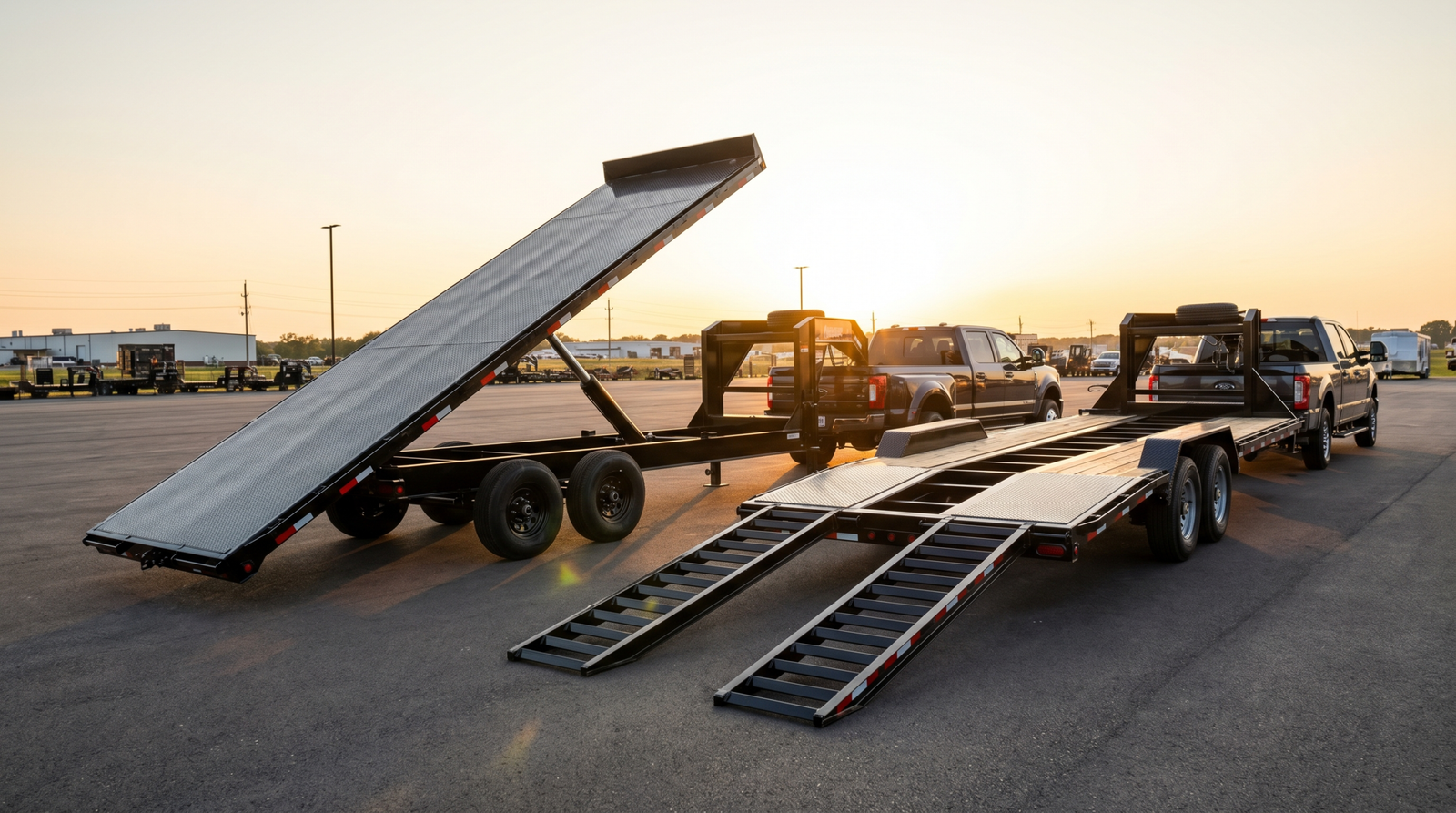
Slide-in ramps are heavy steel ramps that store under the rear of the trailer and pull out for loading. Cheaper, lighter, more deck space when ramps are stowed.
Tilt deck trailers have a hydraulic or mechanical tilt that drops the front of the deck flat to the ground. No separate ramps. Smoother loading at zero or near-zero degrees.
Cost Comparison
Slide-in ramps add $0–$400 to a trailer (often included). Tilt-deck adds $2,500–$5,500 over a comparable ramp trailer. The price gap is real and reflects the added hydraulic system.
Loading Speed
Tilt deck wins by 1–3 minutes per load. With a hydraulic tilt, you press a button and the deck drops in 20–40 seconds. Slide-in ramps require physically lifting heavy steel out of the trailer (45–85 lbs each), positioning, and pinning — about 1–3 minutes total.
Over 200 loads per year, that’s 3–9 hours of saved time — not nothing for a working contractor.
Equipment Trailer Tilt vs Ramp by Use Case
Tracked Equipment (Use Tilt)
Mini-excavators, compact track loaders, and skid steers with rubber tracks tear up wood ramps fast. Tilt eliminates the ramp surface entirely. Tilt is the safer pick for any tracked machine over 8,000 lbs.
Wheeled Equipment (Either Works)
Wheeled skid steers, telehandlers, and forklifts roll smoothly up ramps. Slide-in ramps are fine and save the cost premium.
Mixed Fleet (Tilt is Worth It)
If you haul varied equipment — sometimes a forklift, sometimes a small dozer, sometimes a tractor — the consistent flat-load surface of a tilt deck handles everything without ramp angle issues.
Daily Loading (Tilt Pays Back)
Loading more than 5–10 times per day, the time savings of a tilt deck pays back the price premium within 18–24 months.
Equipment Trailer Tilt vs Ramp Comparison Table
| Factor | Slide-In Ramps | Tilt Deck |
|---|---|---|
| Trailer cost premium | $0–$400 | $2,500–$5,500 |
| Load speed | 1–3 min | 20–40 sec |
| Solo-loading friendly | Difficult — ramps heavy | Yes — hydraulic |
| Tracked equipment | Damages ramps fast | No issue |
| Deck space available | Full — ramps stow underneath | Slightly less (no underbed storage) |
| Maintenance | None to minimal | Annual hydraulic service |
| Best for | Wheeled, occasional use | Tracked, daily, mixed fleet |
What to Look for in Each
Slide-In Ramps
Look for HD ramps rated for at least 6,000 lbs each. Pin-locking systems prevent ramps from sliding during transport. Aluminum ramps weigh half what steel does and don’t rust — worth the upcharge if you load often.
Tilt Decks
Hydraulic tilt with a wireless remote is the modern setup. Cylinder brand matters — see our hydraulic pump brand guide for which to trust. Mechanical (gravity) tilt is cheaper and simpler but slower.
Outbound References
For tilt-deck angle and load distribution standards, see the OSHA 1926 ramp standards. For federal load-securement, the FMCSA 49 CFR 393.130 applies to both setups.
Common Questions About Equipment Trailer Tilt vs Ramp
Is tilt safer?
Yes, especially for tracked or heavy equipment. Lower angle means lower risk of high-centering or rollover during loading.
Can I retrofit a tilt mechanism to a ramp trailer?
Generally no — the chassis design is different. Buy the right configuration up front.
What about hydraulic tilt failure?
Most hydraulic tilt systems include a manual gravity-drop fallback. If the pump fails, you can still load (slower).
What about resale value?
Tilt-deck trailers retain about 5–10 percent more of original value at resale than ramp trailers because they’re less common and in higher demand for tracked equipment.
Ready to Buy?
Browse equipment trailers for sale filtered by tilt or ramp. Pair with our skid steer loading guide for safe operation.
Request a free delivered quote with your tilt/ramp preference and we’ll send out-the-door pricing same business day.
What to Look For When Buying a Tilt-Deck or Ramp Trailer
Six spec items separate a good equipment trailer tilt vs ramp pick from a marginal one.
Frame and Crossmember Spacing
Equipment trailers carry concentrated loads. Look for 6-inch I-beam or 6-inch tube main frame minimum, with crossmembers on 12-inch centers (16-inch is acceptable for lighter ratings). Wider spacing flexes the deck under skid steer tracks.
Axle Brand and Capacity
Dexter or Lippert. 7K axles for 14K trailers, 8K axles for 16K, 10K axles for 20K+. Off-brand axles cost the manufacturer less but cost you 30 percent of bearing life.
Wood Deck Quality
Pressure-treated southern yellow pine is the standard; Apitong tropical hardwood is the upgrade for heavy daily use. Boards should be 5/4 thickness minimum, screwed (not nailed) to the crossmembers.
Tilt Deck Hydraulic Pump
For tilt-deck trailers specifically, the pump brand determines reliability. KTI and Bucher are the two brands worth paying for. See our hydraulic pump brand guide for full rankings.
Ramp Spec on Slide-In Models
HD steel ramps rated 6,000+ lbs each are the minimum for a 14K trailer. Aluminum ramps are lighter but less common; only worth paying for if you load 5+ times per day. Pin lock systems must be present.
Wiring and Lighting
Sealed LED tail lights, conduit-routed wiring, and a corrosion-resistant 7-pin connector. Cheap trailers cut costs here and you pay later in road-side electrical issues.
Tilt vs Ramp Resale Value
Tilt-deck trailers retain about 5–10 percent more of original purchase price after 5 years of use, because they’re harder to find on the used market and contractors will pay extra to skip the ramp hassle. Ramp trailers are easier to find used so the supply pushes prices down.
Insurance Considerations
Both setups insure at similar rates because the GVWR and use case dominate the underwriting. The difference is in claims — tilt-deck trailers see fewer loading-injury claims than ramp trailers, which can earn a small discount with the right insurer.
Where Equipment Trailer Tilt Vs Ramp Fits in Your 2026 Buying Plan
If you’re comparing every option for equipment trailer tilt vs ramp, three resources help. The federal FMCSA cargo securement standards (49 CFR 393.100) apply on every public road. The NHTSA towing safety guide covers tow-vehicle setup. And our parent buyer’s guide covers sizing, brands, and 2026 pricing for the broader category.
Pricing on equipment trailer tilt vs ramp has stabilized in 2026 after the steel-cost swings of the early 2020s. Whether you’re buying first-time or replacing a unit, equipment trailer tilt vs ramp decisions still come down to use case, brand, and delivered out-the-door price. PrimeLoad’s position is to make the comparison transparent.
Browse Equipment Trailer Tilt Vs Ramp inventory to see every option with full specs and delivered pricing. Free delivery to all 50 states from PrimeLoad Trailers.