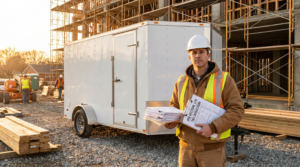
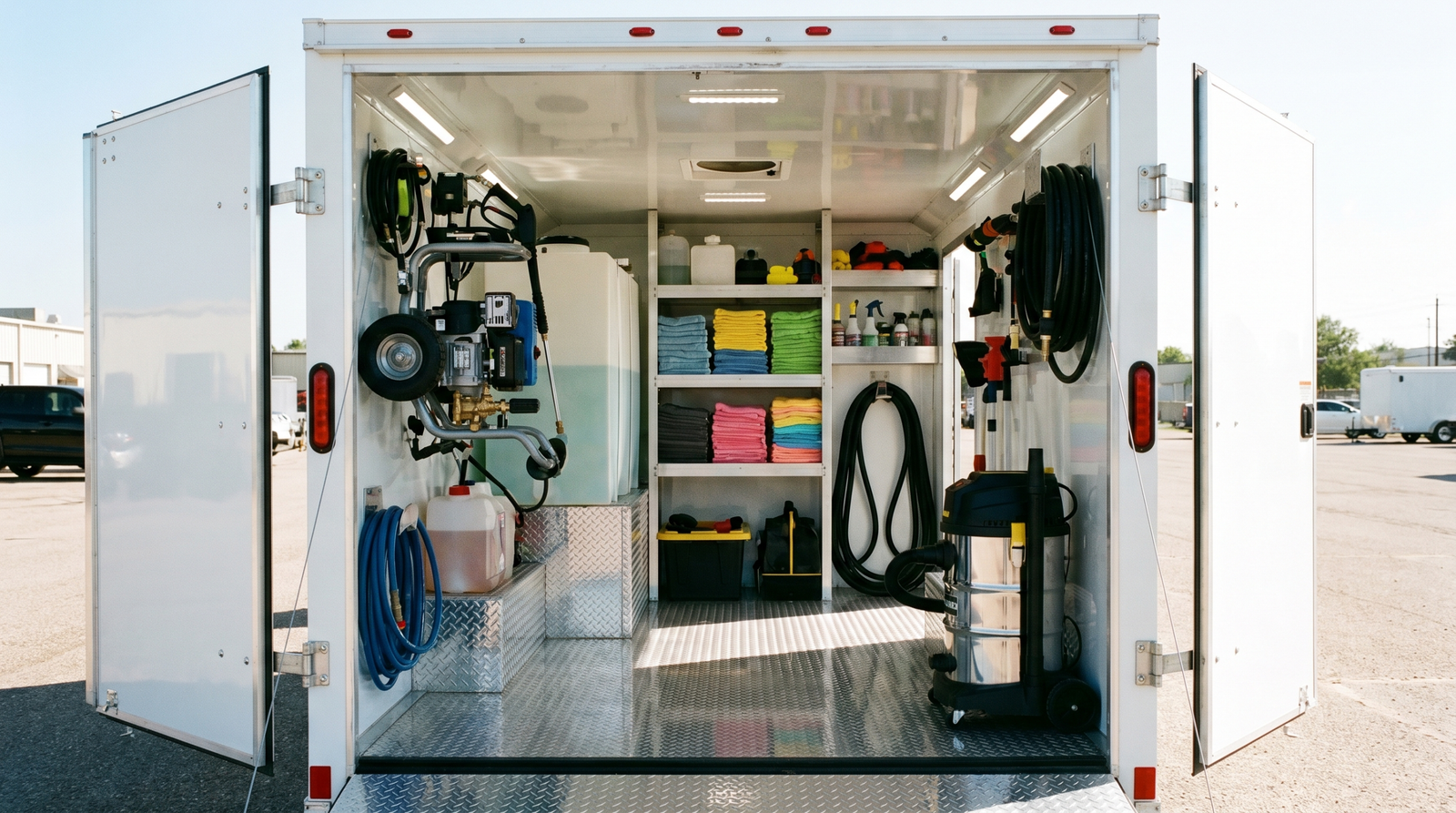
Setting up a mobile detail trailer is the fastest path to a six-figure detailing business — if you spec the build right. Mobile detailing demand has tripled in five years, and a properly outfitted mobile detail trailer setup turns a one-truck operator into a multi-vehicle revenue machine. This guide walks through the complete build: water system, power, vacuum, pressure washer, storage, exterior wrap, and the budget tiers that match each level of the business.
Why a Mobile Detail Trailer Setup Pays Back Fast
A working mobile detailer with a properly outfitted trailer can complete 4–6 vehicles per day at $150–$400 each. That’s $600–$2,400 daily revenue from a single operator. Compared to a fixed shop, the mobile model has zero rent, you go to the customer, and you can flex schedule around weather. The trailer is the production unit — spec it right and it pays back in 6–12 months.
For broader cargo trailer buying advice, see our cargo trailers buyer’s guide.
Mobile Detail Trailer Setup: System Requirements
Water System
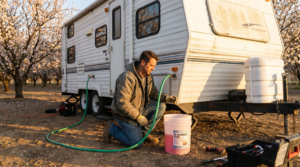
Two fresh-water tanks (50–100 gallons each) feeding a pressure pump. Add a small water heater (12V or LP) for hot water on coatings and tar removal. Reclaim/grey-water tank required for wash-and-go work in jurisdictions that ban runoff (California, New York City, parts of WA). Total water system: $1,200–$3,500.
Power System
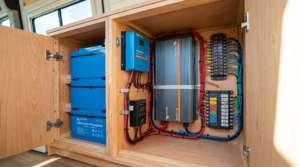
3,000–5,500 watt inverter generator (Honda EU3000is or Honda EU2200i x 2 in parallel) provides power for vacuum, pressure washer, lighting, water heater. A lithium battery bank with 200 Ah capacity and a 200 W solar panel adds silent backup. Total: $2,000–$4,500.
Pressure Washer
4 GPM, 4,000 PSI hot-water pressure washer is the working spec. Mounted on the front bulkhead with high-pressure hose reel. $1,200–$2,800.
Vacuum
Mytee or Tornador truck-mount vacuum, 16-gallon capacity, with hose reel. Mounted on the side wall above the wheel well. $600–$1,400.
Storage and Mounts
E-track shelving for chemicals, microfibers, polishers, towels, and detail supplies. Toolbox at the front for hand tools. Wall-mounted DA polisher rack. $500–$1,500.
Lighting
4-foot LED shop lights inside (5,000K daylight) plus exterior LED work lights for late-day detail jobs. $200–$500.
Trailer Size for Mobile Detail Setup
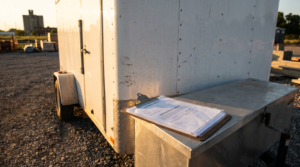
A 7×14 V-nose enclosed cargo trailer is the entry point. 8.5×20 is the working pro size. Anything bigger gets unwieldy in residential driveways. Match GVWR to your wet-loaded weight — 200 gallons of water alone is 1,670 lbs.
Mobile Detail Trailer Setup Cost Tiers
| Tier | Total Build | Trailer + Build | Best For |
|---|---|---|---|
| Starter | $6,000–$10,000 | $16K–$25K | Solo, weekend operator |
| Pro | $12,000–$20,000 | $25K–$45K | Full-time solo, 4 cars/day |
| Multi-Bay | $25,000–$45,000 | $45K–$80K | 2-person crew, 6–8 cars/day |
Outfitting Pattern
Standard side-wall layout: pressure washer at front-left, water tanks centered along left wall, vacuum at right-front above the wheel, generator in vented compartment at right-rear. Center aisle clear for product staging.
For E-track shelving and tool mounting tactics, see our enclosed trailer outfitting guide.
Common Mistakes
Undersizing the generator: a 2,000W generator can’t run a hot-water pressure washer, a vacuum, and lights simultaneously. Spec 3,500W minimum.
Skipping reclaim/grey-water: jurisdictions are tightening on runoff. Plan for reclaim from day one even if your current customers don’t require it.
Cheap pressure washer: a residential pressure washer dies in 6–12 months of daily use. Commercial-grade is a $1,500–$2,500 mandatory cost, not a luxury.
Outbound References
For runoff and water reclamation rules, the EPA NPDES permit standards apply for any commercial wash that drains to storm sewer. State-specific rules vary; check your state’s environmental agency.
Common Questions
Hot water or cold water pressure washer?
Hot. Cold can’t break tar, bug guts, or road grime efficiently. Cuts wash time 30–40 percent.
Single trailer or multi-trailer fleet?
Start single. Most successful detailers run 1 trailer per 2 operators — the production rate scales with people, not trailers.
Wrap the trailer or stay plain?
Branded wrap costs $2,500–$5,000 and generates 5–8 leads per week from drive-by visibility. Pays back in 2–3 months. Always wrap.
Can I rent a trailer to test the model first?
Yes — some detailing supply companies rent fully-outfitted mobile detail trailers for $200–$400 per day. Run for 3–5 days to validate the business before buying.
Ready to Buy?
Browse cargo trailers for sale filtered for V-nose 7×14 and 8.5×20 with side man door and shore power options. Pair with our cargo trailer pillar guide and outfitting guide for the complete build path.
Request a free delivered quote with your detail-rig spec and we’ll send out-the-door pricing same business day.
Where Mobile Detail Trailer Setup Fits in Your 2026 Buying Plan
If you’re comparing every option for mobile detail trailer setup, three resources help. The federal FMCSA cargo securement standards (49 CFR 393.100) apply on every public road. The NHTSA towing safety guide covers tow-vehicle setup. And our parent buyer’s guide covers sizing, brands, and 2026 pricing for the broader category.
Pricing on mobile detail trailer setup has stabilized in 2026 after the steel-cost swings of the early 2020s. Whether you’re buying first-time or replacing a unit, mobile detail trailer setup decisions still come down to use case, brand, and delivered out-the-door price. PrimeLoad’s position is to make the comparison transparent.
Browse Mobile Detail Trailer Setup inventory to see every option with full specs and delivered pricing. Free delivery to all 50 states from PrimeLoad Trailers.