Looking for cargo trailers for sale? You’ve found one of the largest online lineups in America, with free delivery to all 50 states. This guide walks you through every detail you need before you buy, from sizes and lift mechanisms to 2026 pricing and brand reputations.
Cargo Trailers For Sale in 2026: What Smart Buyers Watch For
The trailer industry has shifted under buyers’ feet over the last three years. Anyone shopping cargo trailers for sale in 2026 faces more transparent pricing, better delivery logistics, and bigger spec sheets than ever. The federal FMCSA CDL rules for towing have not changed (no CDL needed under 26,001 lbs combined GVWR), but how dealers package cargo trailers for sale listings has. Free nationwide delivery, side-by-side spec comparisons, and out-the-door pricing are now the norm at any reputable dealer. Don’t accept anything less.
Brand selection matters too. The NHTSA tire safety standards govern how every trailer-rated tire performs at GVWR; brands that buy lower-rated tires to hit a price point are easy to spot once you know what to look for. Whether you’re a first-time buyer or your fifth purchase, finding the right cargo trailers for sale comes down to two things: matching capacity to use and trusting the brand to back the build. This guide walks you through every variable that matters before you sign.
nn
Shopping cargo trailers for sale sounds simple until you start comparing units. One dealer pushes a 6×12 single axle. Another swears you need a tandem. The brochure says V-nose, the salesman says flat front, and the spec sheet has 84 inch interior height for a price that buys two regular trailers. After 15 years of selling these out of our Woodland, Washington yard, I can tell you the size, axle count, nose shape, and brand all matter, and getting them right saves you thousands and a lot of frustration.
This guide walks through every choice that matters: sizes from 5×8 up to 8.5×24, V-nose versus flat front, single versus tandem axle, steel versus aluminum construction, the brands worth your money, real 2026 pricing, and the features that separate a trailer you keep for ten years from one you regret in six months. PrimeLoad ships any cargo trailer in our inventory free to all 50 states, so geography is never the deciding factor. Spec is.
Cargo Trailer vs Enclosed Trailer: Same Thing or Not?
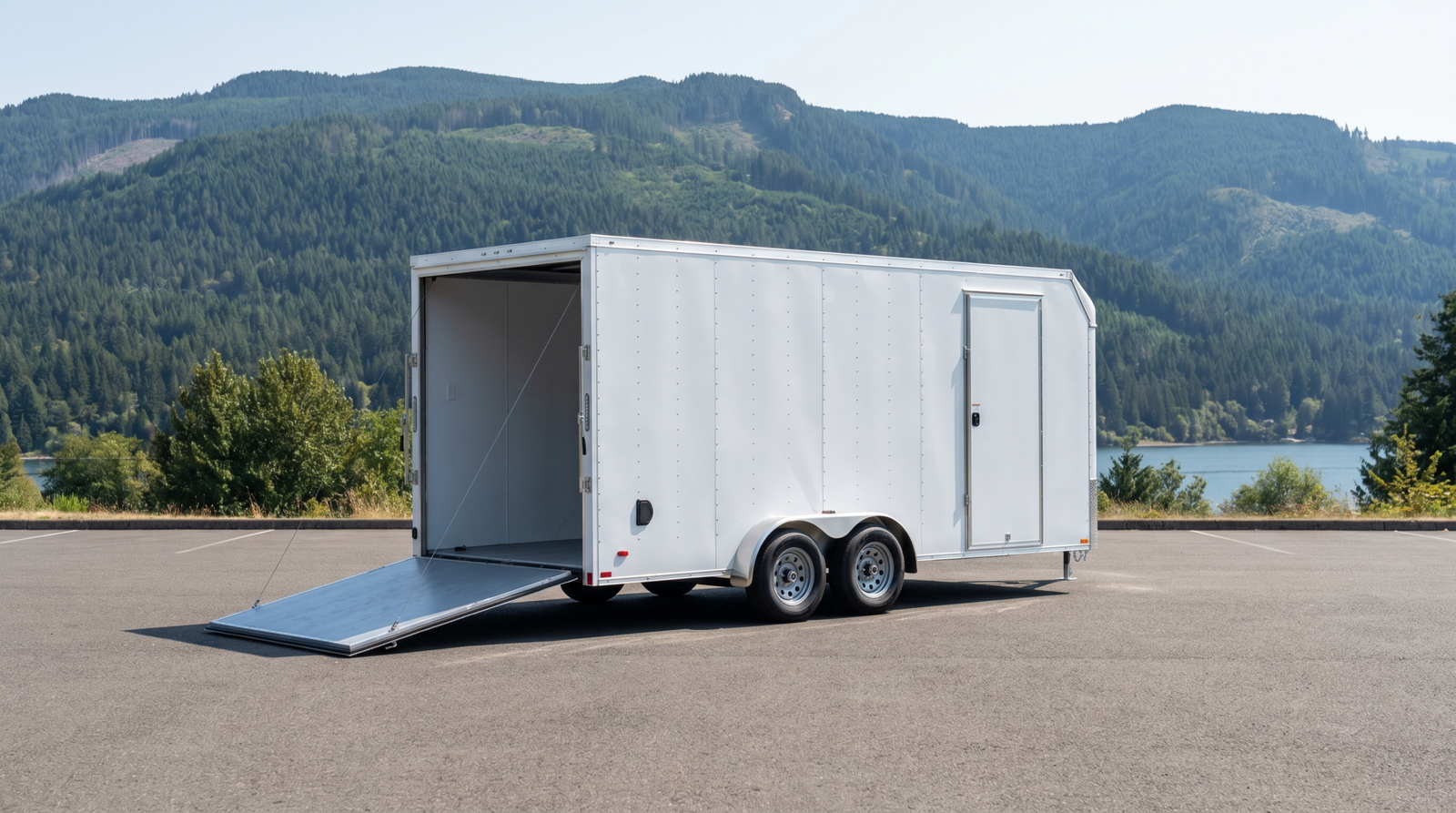
The terms cargo trailer and enclosed trailer get used interchangeably, and 95% of the time they mean the same product: a trailer with walls, a roof, a door system, and a flat floor designed to carry stuff under cover. The interior height ranges from about 60 inches in compact models up to 84 inches or taller in race-spec units. The frame is steel or aluminum. The skin is bonded aluminum sheet, screwed or screwless.
Where the terms split:
- Cargo trailer tends to describe the workhorse versions: contractor tools, small business hauling, moving, mid-size powersports.
- Enclosed trailer shows up more often when the use case is specific: enclosed car hauler, enclosed motorcycle trailer, enclosed snowmobile trailer.
- Enclosed cargo trailer is the catch-all phrase Google and every shopper types when they want both keywords covered.
If you see cargo, enclosed, covered cargo, or enclosed utility in a listing, treat them as the same category and compare on size, axle, and spec rather than nameplate.
Cargo Trailer Sizes: From 5×8 to 8.5×24
Width and length drive everything: payload, what fits, towing rig, garage clearance, and price. Height (60″, 72″, 76″, 84″) determines whether you can stand up inside and what tall cargo will fit.
5×8 Cargo Trailer
The smallest practical enclosed trailer. Single axle, around 1,800 to 2,200 lb GVWR, interior height usually 60 inches so you cannot stand up. Good for: a couple of dirt bikes, small moving jobs, lawn care side hustles, locked tool storage. Towable behind a midsize SUV or half-ton pickup with no drama. Price range: $4,500 to $6,500.
6×10 Cargo Trailer
Step up in length, still single axle. About 2,990 lb GVWR. Fits a single sled with extra room or a full motorcycle plus gear. Common for handymen and pressure washers. Interior height typically 72 inches. Price range: $5,500 to $7,800.
6×12 Cargo Trailer
The most popular small-to-mid size we sell. Single axle is fine for light use under 2,500 lb of cargo. Tandem axle 6×12 bumps GVWR to around 7,000 lb and earns its keep if you regularly haul heavier or tow long distances. Use cases: mobile detailers, small contractors, moving 1-bedroom apartments, side-by-side ATV. Price range: $6,200 to $9,500.
7×14 Cargo Trailer
This is where most full-time use begins. Tandem axle, 7,000 lb GVWR, 76-inch or 84-inch interior height options. Holds a full-size UTV, a motorcycle plus a workshop setup, or contractor tools with room left for a workbench. Price range: $8,000 to $12,500.
7×16 Cargo Trailer
The sweet spot for mobile businesses, two-sled snowmobile owners, and small race teams. Adds two feet of length without making the rig much harder to back up. 7,000 lb GVWR standard, often upgradable to 9,990 lb. Price range: $9,500 to $14,000.
8.5×16, 8.5×20, 8.5×24
Once you cross 8.5 feet wide, you are in commercial territory. These trailers fit a full-size car or truck inside, two ATVs side by side, or a mobile mechanic shop with room for a generator and air compressor. The 8.5×24 is the workhorse for race teams, mobile detailers, and serious contractors. Interior heights of 84 inches and 90 inches are common. Tandem 5,200 lb axles, electric brakes on both, and aluminum skin in many trims. Price range: $13,000 to $32,000+ depending on brand and spec.
Quick Sizing Cheat Sheet
| Size | Axle | GVWR | Best For |
|---|---|---|---|
| 5×8 | Single | 2,200 lb | Storage, small moves |
| 6×10 | Single | 2,990 lb | Single bike, light tools |
| 6×12 | Single/Tandem | 2,990-7,000 lb | UTV, mobile pro, mid moves |
| 7×14 | Tandem | 7,000 lb | Daily contractor use |
| 7×16 | Tandem | 7,000-9,990 lb | Two sleds, race team |
| 8.5×20 | Tandem | 9,990-14,000 lb | Full car, mobile shop |
| 8.5×24 | Tandem | 10,400-14,000 lb | Pro race, mobile business |
Browse the full cargo trailer inventory to see live stock with photos and current pricing.
V-Nose vs Flat Front Cargo Trailer
This is the fastest argument at any trailer dealership. Here is the honest breakdown.
V-nose trailers add roughly 18 to 24 inches of pointed front, which delivers four real benefits:
- Aerodynamics: independent testing shows fuel economy gains of 0.5 to 1.5 MPG at highway speeds versus a flat front of the same length. Over 10,000 towing miles, that is real money.
- Extra storage: the wedge gives you about 20 cubic feet of bonus space, perfect for a generator, fuel cans, or shelving.
- Less sway: the angled face cuts crosswind resistance, especially on tandem axle units running at highway speed.
- Resale: V-nose units sell faster on the used market by a margin we see every month.
Flat front trailers still have a place:
- Maximum interior square footage for a given trailer length. If you build cabinets along the front wall or need a perfectly rectangular floor plan, flat is your friend.
- Lower price by typically $300 to $700.
- Easier to package with built-in features like a workbench, washer/dryer, or fold-up bunk against the front wall.
For mixed-use buyers, V-nose wins about 9 times out of 10. The fuel savings alone often cover the price bump within two seasons. Read our deeper V-Nose vs Flat Front comparison for tow-test data and which body style holds value better.
Single Axle vs Tandem Axle
The axle count is not just about how much weight the trailer can carry. It changes how the trailer behaves on the road.
Single Axle
- Payload: typically 2,000 to 3,000 lb of cargo
- Pros: lighter empty weight, easier to push by hand around your driveway, cheaper to maintain (one set of tires and brakes), tighter turning circle
- Cons: blowout means the trailer drops and you are stranded, more bouncy ride empty, more sway in crosswinds
- Best for: trailers under 12 feet, light loads, occasional use, in-town hauling
Tandem Axle
- Payload: 5,000 to 10,000+ lb of cargo
- Pros: stable at highway speed, blowout still leaves you rolling on three tires, electric brakes on all four wheels for better stopping, smoother ride loaded
- Cons: twice the tire and brake replacement cost, harder to maneuver by hand, heavier empty weight
- Best for: any trailer 14 feet or longer, regular highway use, anything over 5,000 lb of cargo, towing across state lines
If you plan to use the trailer more than 20 times a year or tow it 50+ miles regularly, go tandem. The extra $700 to $1,200 pays for itself in safety and longevity.
Construction: Steel vs Aluminum
Cargo trailers come in three main flavors: all-steel frame and skin, steel frame with aluminum skin (the most common), and all-aluminum frame and skin (premium).
All-Steel Frame, Aluminum Skin (Industry Standard)
About 80% of cargo trailers on the road. Steel frames take a beating, and aluminum skin (typically .024 to .040 thickness) resists rust and dents. Cost-effective, repairable at any welding shop, and properly coated steel runs 15 to 20 years in the rainy Pacific Northwest. Brands like Homesteader, Diamond Cargo, Cargo Pro, Haulmark, and Covered Wagon build this way.
All-Aluminum (Premium)
The frame, skin, roof bows, and crossmembers are all aluminum. Saves 20% to 30% empty weight, which matters if you tow with a half-ton truck near its limit. No rust ever. Better resale value. Costs 25% to 40% more than equivalent steel-frame units. ATC and Sport Haven are the all-aluminum specialists in our lineup. ATC dominates the high-end mobile business and race trailer market for good reason.
Climate Considerations
- Salt belt or coastal climate: aluminum or galvanized steel frame is worth the upgrade. Standard painted steel will rust at the seams within 5 years if you do not stay on top of it.
- Dry interior west: standard steel frames last decades with basic care.
- Heavy snow country: rounded aluminum roof sheds snow better than flat, and a steel frame with screwed exterior tolerates ice abuse during loading.
For the average buyer who tows 5,000 miles a year and parks under cover, a steel-frame aluminum-skinned trailer from Homesteader or Diamond Cargo gives the best value. For pros who live in their trailer or chase resale, ATC aluminum is the long play.
Best Cargo Trailers by Use Case
Picking by use case beats picking by spec sheet every time. Here is what works for what.
Mobile Business (Detailing, Mechanic, Pressure Washing, Coffee Cart)
Go 7×16 minimum, 8.5×20 for a full mobile shop. Tandem axle, 84-inch interior height, V-nose, 50-amp electrical package, RV-style side door, finished walls and ceiling, generator vent, and four D-rings minimum. The ATC 8.5×24 Mobile Command Center is the dream build for serious operators. See our mobile mechanic setup guide for build specs.
Motorsport Hauler (Race Car, Drift, Rally)
8.5×20 to 8.5×24, tandem 5,200 lb axles, beavertail floor, 7-foot ramp rated 4,000+ lb point load, aluminum wheels, spare tire, RV door, curb-side escape door, and 50-amp shore power. Formula and ATC dominate this segment.
Snowmobile Hauler
7×18, 7.5×22, or 8.5×20 with inline floor plan, ski guides, full-length D-track, drop-down rear ramp, side door for crew, and white-out exterior to keep cabin temps livable. The Formula 7.5×22 Snowmobile is purpose-built for this and holds resale value better than most.
UTV / ATV Hauler
Full-size UTVs (Polaris RZR, Can-Am Maverick) need 8.5-foot width and 84-inch interior height. 8.5×16 fits one machine plus gear. 8.5×20 fits two side-by-side. Specify the heavy-duty ramp (4,000 lb minimum), 5,000-lb tie-down rings, and aluminum tread plate floor.
Landscape / Lawn Care
6×12 or 7×14 with a side door wide enough for a 36-inch mower, 3,500-lb ramp, interior shelving for trimmers, and 12-volt LED lighting. Steel construction is fine here. Homesteader and Cargo Pro both build excellent landscape spec.
Contractor / Tools
7×14 to 7×16 tandem. E-track on both walls, workbench across the front (flat front wins here), pre-wired electrical, ladder rack, and a steel security latch on the side door.
Moving / Personal Storage
6×12 single axle handles a one-bedroom apartment. 7×16 tandem handles a 2-bedroom house. Get a ramp door, not barn doors. The Homesteader 6×12 V-Nose is our most popular trailer for movers because it tows easy and fits a standard garage.
Motocross
6×12 V-nose holds two bikes and gear. 7×14 holds three plus a workbench. Floor D-rings, wheel chocks, and finished walls so you can mount a tool board.
Top Cargo Trailer Brands Compared
PrimeLoad stocks eight brands because no single manufacturer wins every category. Here is how the major names stack up.
ATC (Aluminum Trailer Company)
The premium all-aluminum builder. Welded aluminum frame, screwless skin, and tolerances closer to aerospace than agriculture. Mobile business, race teams, and command-center buyers go ATC and keep them 15+ years. Pay 30% to 40% more than a steel-frame trailer. Resale stays strong.
Homesteader
Best value in the lineup. Steel-framed, aluminum-skinned, built in Tennessee. Their Intrepid and Hercules series cover 5×8 utility up to 8.5×24 commercial. If you want a solid daily-driver under $10,000, Homesteader is the answer.
Formula
Motorsport-focused. Drop-axle floor plans, snowmobile-specific layouts, race-spec interiors. Their snowmobile and stacker car haulers stand out. Mid-to-high price tier.
Diamond Cargo
Mid-tier value with stronger structural specs than bargain brands. Made in Georgia. Often upgraded to 16-inch on-center walls (most competitors run 24-inch), which means a stiffer trailer over rough roads.
Cargo Pro
Aluminum-bodied at a lower price than ATC. Light, clean lines, solid build. Middle ground for aluminum benefits without the ATC sticker.
Haulmark
Long-running commercial brand. Heavy-duty spec, wide model range, and a strong dealer network for warranty work on the road. Great for cross-country mobile businesses.
Sport Haven
All-aluminum specialist focused on lighter trailers for half-ton trucks and crossovers. Same engineering DNA as their well-known open utility line.
Covered Wagon
Indiana-built workhorse. Strong contractor focus, no-nonsense pricing, delivers what is on the spec sheet.
Interior Height: Why the Numbers Matter
Cargo trailer interior height is one of the most overlooked specs and one of the most important.
- 60 inches: common in 5×8 and small 6×10 units. You cannot stand up. Fine for storage, small powersports, and basic moving.
- 72 inches: typical mid-size standard. A 6-foot person can stand if they tilt their head. Good for most cargo, motorcycles, and mid-size UTVs.
- 76 inches: the sweet spot for working inside the trailer. Most adults stand comfortably. Common upgrade on 7×14 and larger.
- 84 inches: commercial spec. Standard rolling tool chests, full-height shelving, and most ATVs with roll cages fit. Mandatory for mobile business builds.
- 90+ inches: race team and mobile shop spec. Extra height for cabinets above the work area and lifted vehicles.
Pro tip: measure your tallest piece of cargo (with the load straps and ratchets attached) before you commit to a height. A side-by-side with a roof basket and antenna might need 84 inches even though the bare machine fits in 72.
Key Features to Check Before You Buy
The frame and the skin get the brochure attention. The features below get the daily attention.
- Interior tie-downs: at minimum four D-rings rated 5,000 lb each, recessed flush with the floor. E-track on the walls is a major upgrade for adjustable tie-down points.
- Ramp door rating: the brochure number is the static rating. Confirm the dynamic load rating if you are driving a 3,500-lb car or UTV up the ramp. 4,000-lb dynamic minimum for vehicle haulers.
- Side door: 32 inches wide minimum. RV-style with a window and screen door is a worthwhile upgrade if you spend time inside the trailer.
- Ventilation: at least one roof vent. Two for any unit you store flammables in or work inside. Static vents are fine; powered vents are better in hot climates.
- Finished walls and ceiling: luan plywood interior or aluminum is night-and-day for cleanability and aesthetics versus exposed insulation.
- RV-style entry door: upgrade from the standard side door. Better seal, better look, and far better resale.
- Electrical package: 30-amp shore power with two 110-volt outlets is the entry-level upgrade. 50-amp with a breaker panel is the pro spec for mobile businesses.
- LED interior lighting: 12-volt strip lighting wired to the battery is a $200 upgrade that pays for itself the first time you load at night.
- Stoneguard or rock guard: diamond plate front lower panel protects the skin from highway debris. Standard on most quality builds.
- Spare tire mount and spare tire: often optional. Add it. A blowout 200 miles from home is not the time to learn the dealer skipped it.
Before delivery on any used trailer, run through our trailer inspection checklist. It catches the hidden issues that brochures and dealer photos miss.
Cargo Trailer Pricing in 2026
Real numbers from current PrimeLoad inventory and the broader market:
| Size | Entry Price | Mid Spec | Premium |
|---|---|---|---|
| 5×8 single | $4,500 | $5,400 | $6,500 |
| 6×10 single | $5,500 | $6,500 | $7,800 |
| 6×12 single | $6,200 | $7,400 | $8,500 |
| 6×12 tandem | $7,200 | $8,500 | $9,500 |
| 7×14 tandem | $8,000 | $10,200 | $12,500 |
| 7×16 tandem | $9,500 | $11,800 | $14,000 |
| 8.5×16 tandem | $10,800 | $13,500 | $17,000 |
| 8.5×20 tandem | $13,000 | $17,500 | $24,000 |
| 8.5×24 tandem | $15,500 | $21,000 | $32,000+ |
The premium column is where ATC, fully optioned Formula motorsport units, and 50-amp commercial packages live. Steel ground tariffs, aluminum spot pricing, and component shortages have moved entry pricing up about 6% from 2024 to 2026. We update our sale pricing weekly, so check current stock for the live number.
Free Nationwide Delivery: How It Works
PrimeLoad delivers any cargo trailer in our 44-unit inventory free to all 50 US states. No dealer math, no fuel surcharge, no last-minute add-on. Here is the process.
- Pick your trailer. Browse our cargo trailer inventory or call us if you want help speccing.
- Get a quote. Use our quote form for a written, all-in price. The number on the quote is the number you pay.
- Lock the deal. Sign the paperwork remotely, secure your unit, and we schedule delivery.
- We hand-deliver. Our network of professional drivers brings the trailer to your door. Most lower-48 deliveries land in 7 to 14 days. Alaska, Hawaii, and the far Northeast take longer for obvious reasons.
- Inspect on arrival. Walk around with the driver, sign off, and you are towing the same day.
Free delivery is the difference between paying $1,200 to $2,500 in transport on top of your trailer or paying zero. On a $9,000 cargo trailer, that is real money back in your pocket.
How to Compare Cargo Trailers For Sale Side-by-Side
Most buyers comparing cargo trailers for sale get one or two spec lines wrong on their first pass.
Three numbers settle most decisions when you’re shopping cargo trailers for sale: GVWR rating, frame gauge, and hydraulic pump brand. Spec sheets that bury these are a yellow flag.
Brand matters too. Reputable dealers list every cargo trailer with full specs visible. We carry cargo trailers for sale from every major manufacturer in our nationwide inventory.
Pricing on cargo trailers for sale has stabilized in 2026 after the steel swings of the early 2020s. Whether you’re looking at entry-level cargo trailer models or commercial-grade builds, the buying framework in this guide gives you a clean way to evaluate every option.
Ready to start? Browse cargo trailers for sale on our inventory page to see every model with real photos, full specs, and our delivered out-the-door price.
Frequently Asked Questions
Is a V-nose really worth the extra cost?
For 90% of buyers, yes. The fuel economy gain alone (roughly 0.5 to 1.5 MPG at highway speed) covers the $300 to $700 price bump within the first 10,000 miles of towing. You also get the bonus storage in the wedge and stronger resale on the back end. The only buyers we steer toward flat front are those who need maximum interior square footage for a built-in workbench or appliance setup against the front wall.
Single axle or tandem axle for a 6×12?
If you tow under 50 miles per trip and stay under 2,500 lb of cargo, single axle is fine and saves you about $700 to $1,000. For highway use, frequent towing, or any cargo over 3,000 lb, the tandem axle 6×12 is the right answer. The bigger axles, four brakes, and stability at speed pay for themselves the first time you hit a crosswind on I-5.
What are the legal questions for running a mobile business out of a cargo trailer?
Three big ones. First, your business needs to be registered in your operating state with proper insurance. Second, some states require commercial plates and DOT numbers if your combined GVWR (truck plus trailer) is over 10,001 lb. Third, local jurisdictions vary on whether you need a vendor permit to operate in residential neighborhoods. Talk to your accountant and your state DMV before you build out, not after.
Do I need special insurance for a cargo trailer?
Yes. Your auto insurance covers liability when you are towing, but not the trailer itself, the contents, or anything that happens when the trailer is parked and unhooked. Most owners add an inland marine policy or a dedicated trailer policy for $200 to $500 a year, depending on trailer value and contents. Mobile businesses need a commercial policy that covers the trailer as a business asset and the tools inside.
What is the best cargo trailer for motorsport?
For serious race teams, ATC 8.5×24 with the race interior package wins. For weekend track-day drivers, a Formula 7×18 or 8.5×20 with an escape door, beavertail floor, and 4,000-lb ramp gets the job done at half the cost. The non-negotiables are tandem 5,200-lb axles, electric brakes on all four wheels, and a finished interior so you can mount tool boards and storage cabinets.
How much more does aluminum cost over steel?
About 25% to 40% more for an all-aluminum trailer (frame plus skin) versus an equivalent steel-framed, aluminum-skinned trailer. The price gap closes over time because aluminum trailers hold roughly 15% more resale value at the 5-year mark. If you tow heavy loads with a half-ton truck or live in a salt-belt state, aluminum is worth the upgrade. For occasional users in dry climates, steel-frame value brands deliver 90% of the durability at 70% of the price.
Can I finance a cargo trailer with free delivery?
Yes. PrimeLoad partners with several trailer-specific lenders that approve qualified buyers for terms up to 144 months on enclosed trailers over $10,000. Free delivery applies the same whether you pay cash or finance.
Ready to Buy a Cargo Trailer?
Forty-four cargo trailers are sitting in our Woodland, Washington yard right now, ready to ship free to your driveway anywhere in the country. ATC, Homesteader, Formula, Diamond Cargo, Cargo Pro, Haulmark, Sport Haven, and Covered Wagon. Sizes from 5×8 up to 8.5×24. Single and tandem axle, V-nose and flat front, steel and aluminum, basic and fully loaded.
Fifteen years of family ownership means we answer the phone, we know the inventory, and we will tell you when a smaller trailer is the smarter buy for your use case. No commission-chasing nonsense, no last-minute fees, and no markup on delivery.
Browse the full cargo trailer inventory, request a free written quote, or call us today. We will help you spec the right trailer the first time and have it on your driveway in 7 to 14 days.