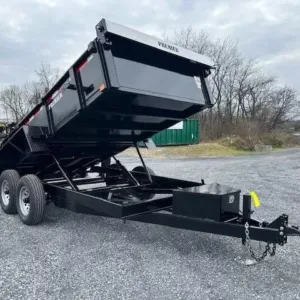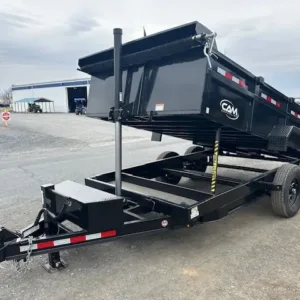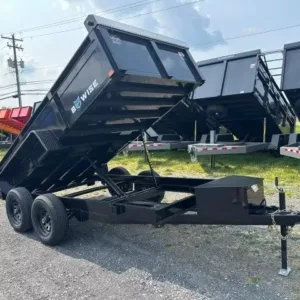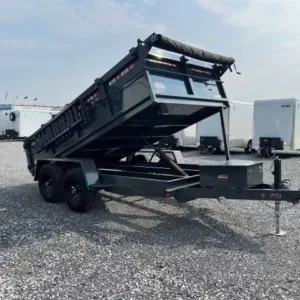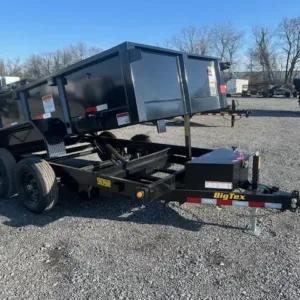
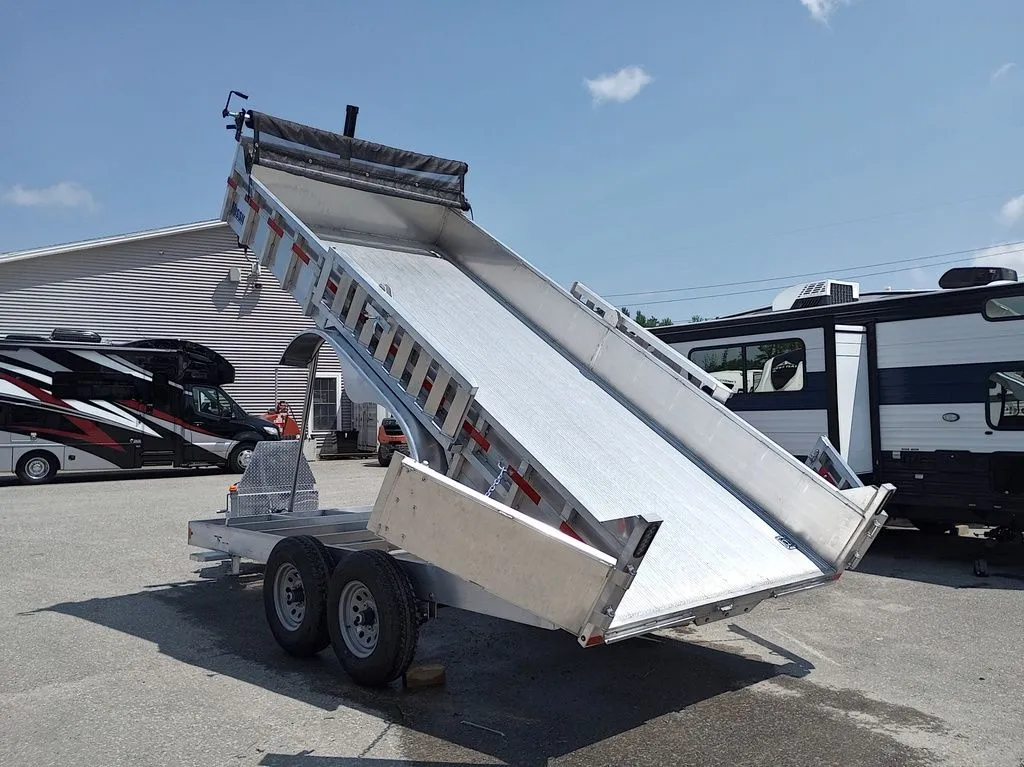

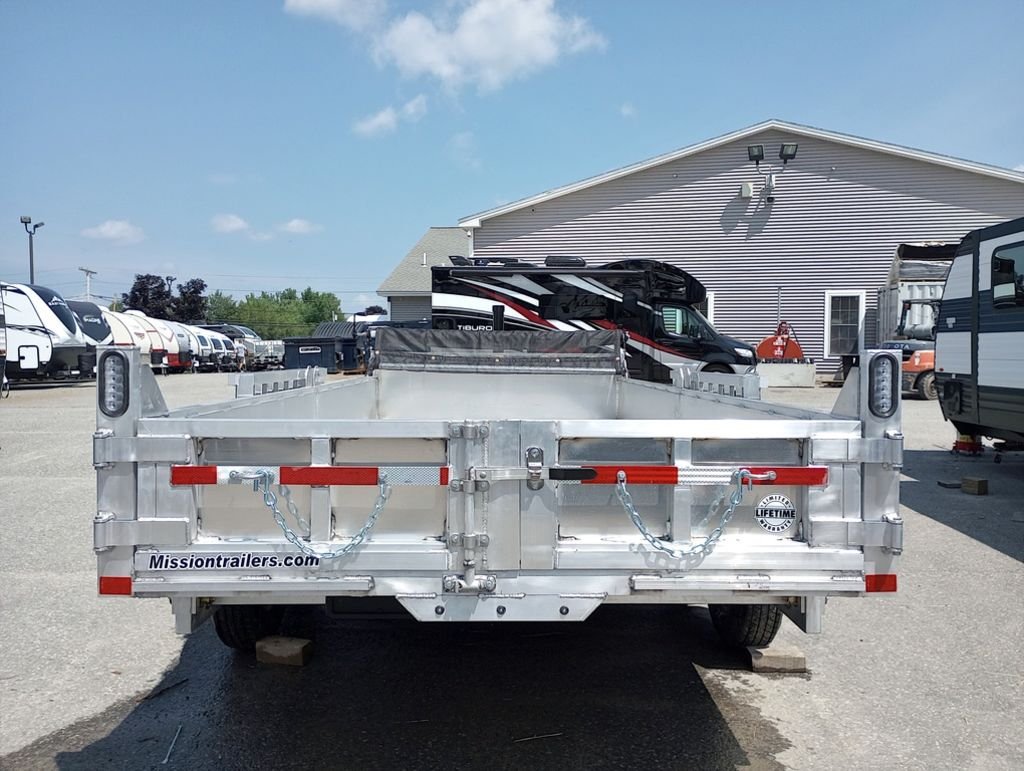
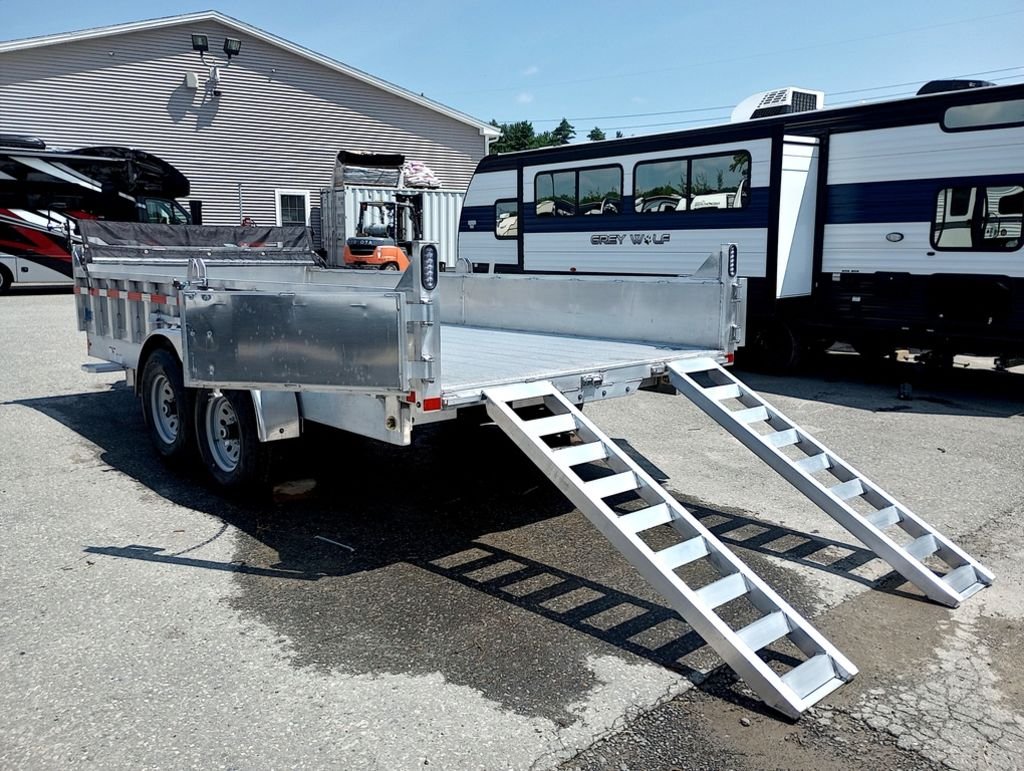
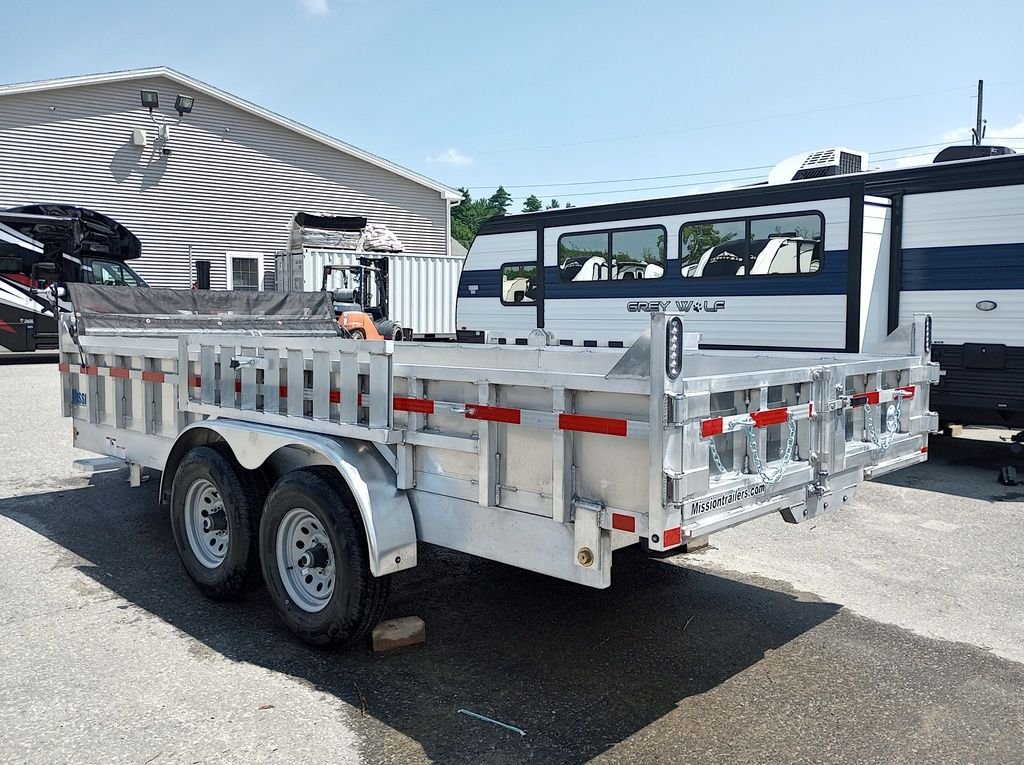
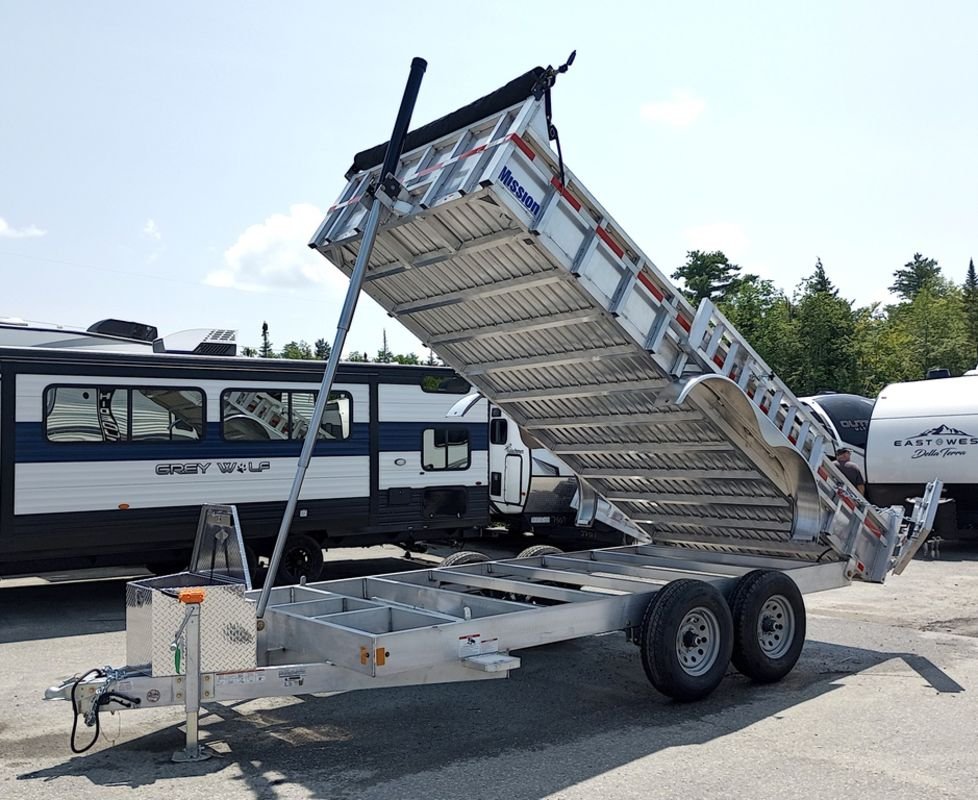
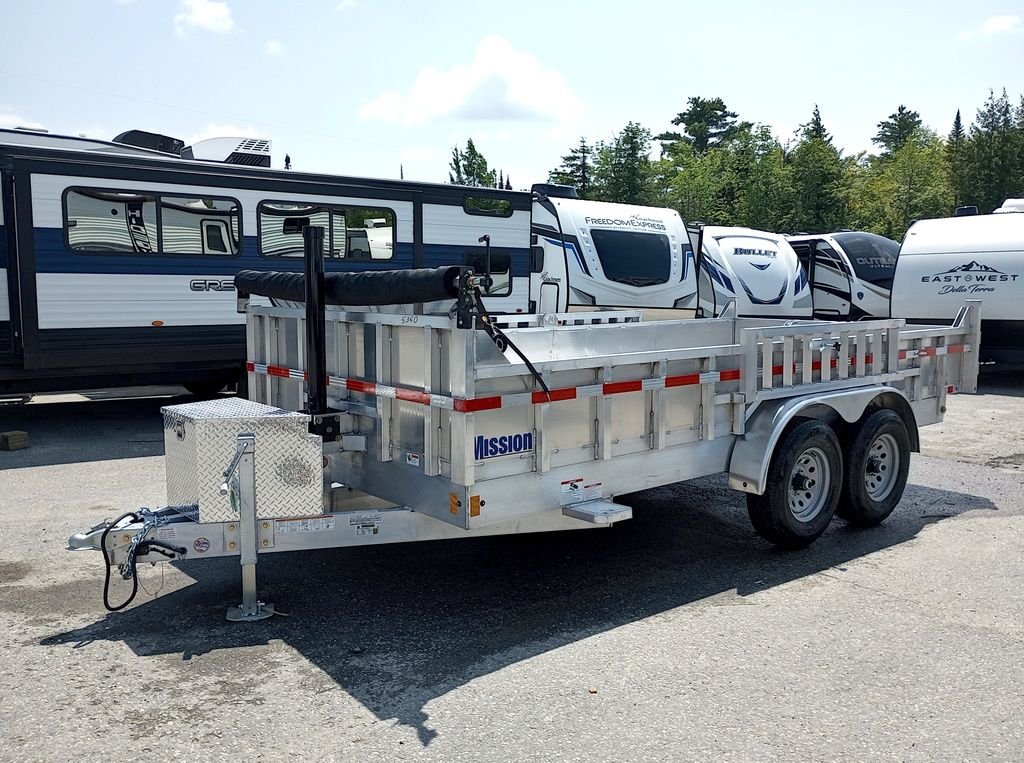
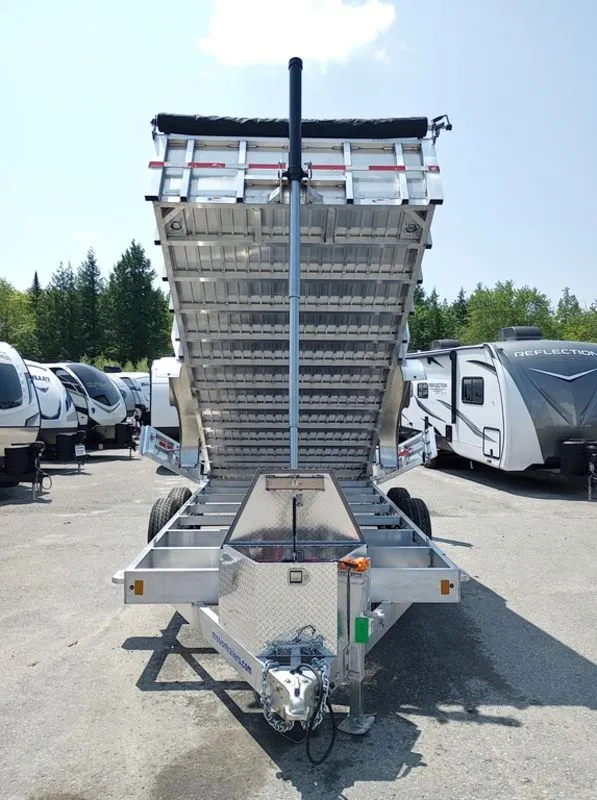
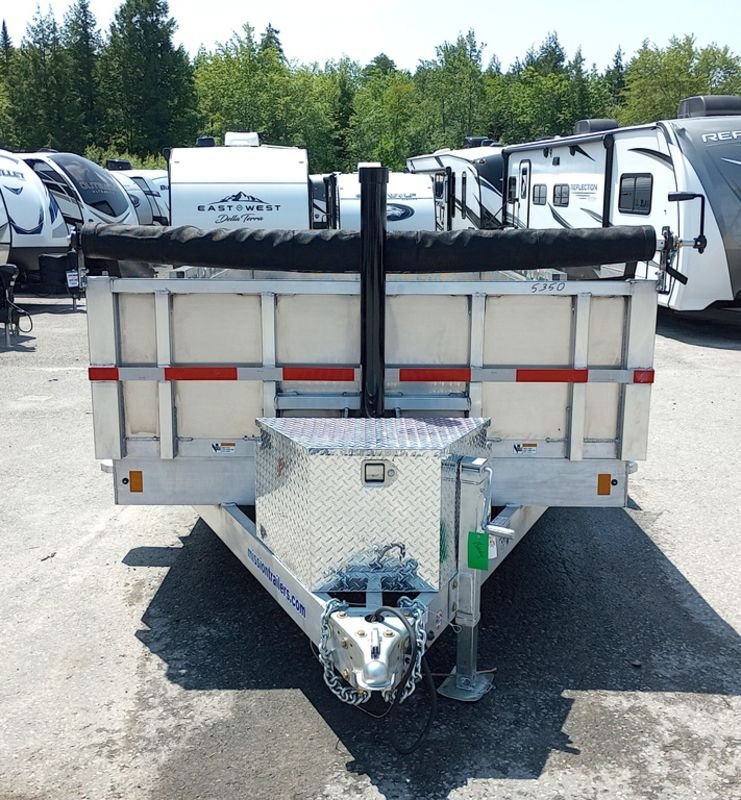
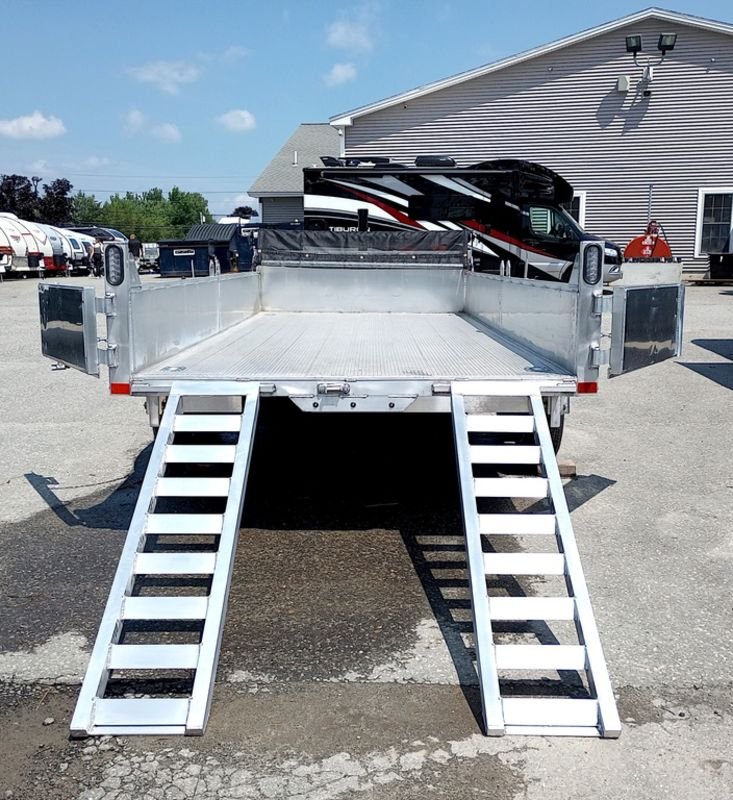
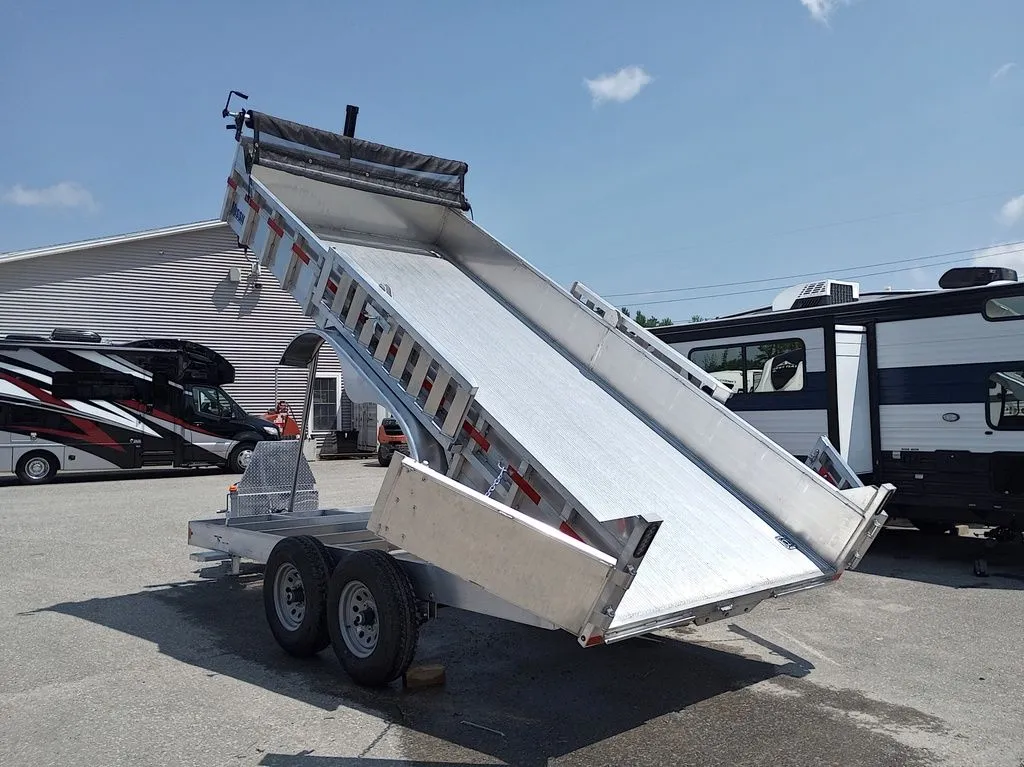
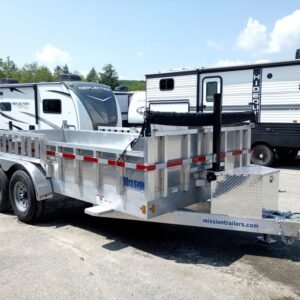
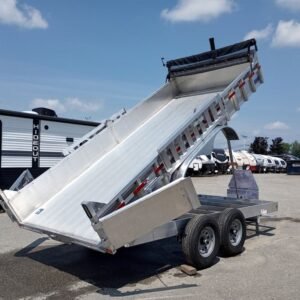
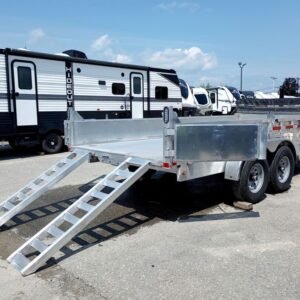
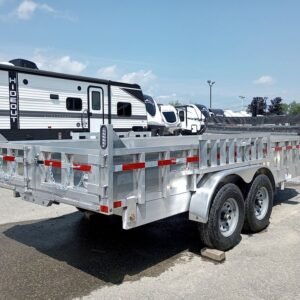
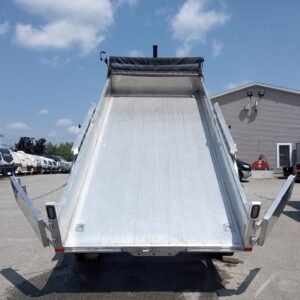
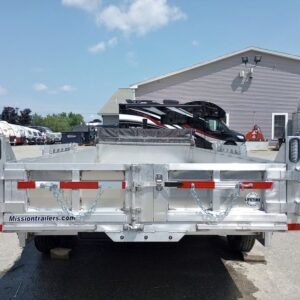
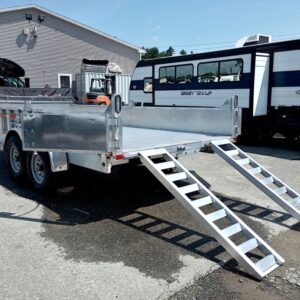
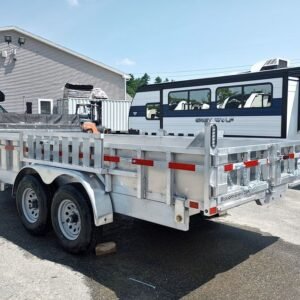
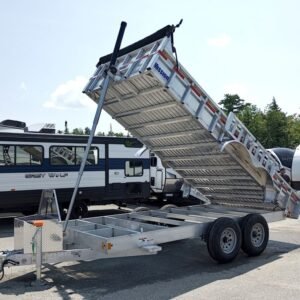
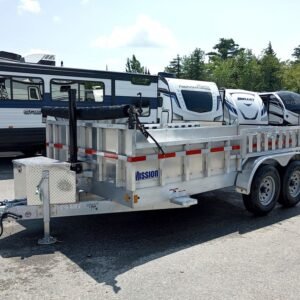
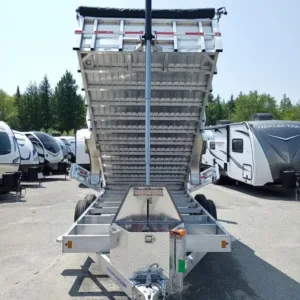
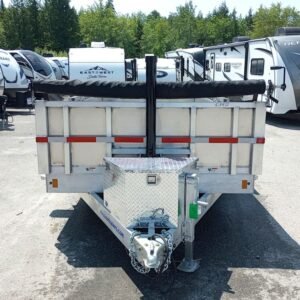
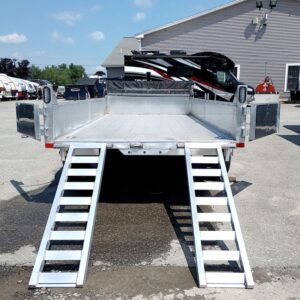
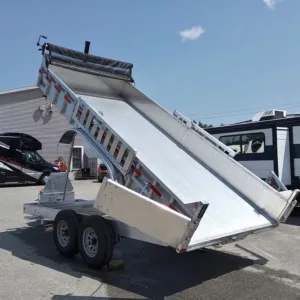
Specifications
| GVWR | 14,000 lb |
|---|---|
| Payload Capacity | 11,351 lb |
| Dry Weight | 2,649 lb |
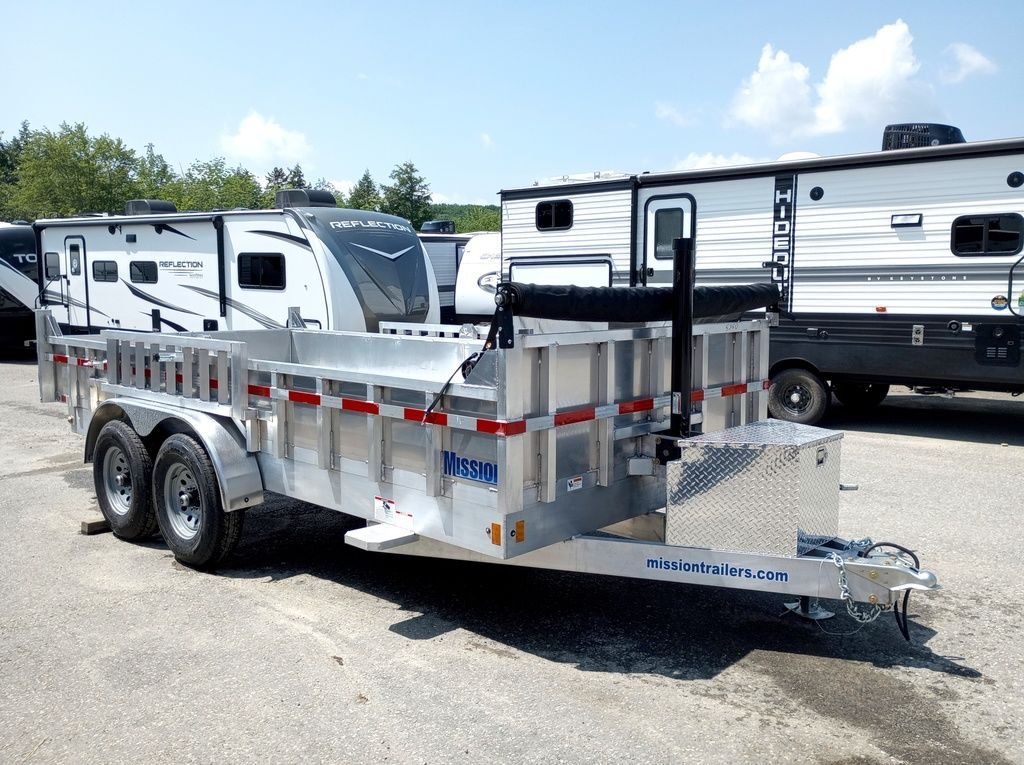
| Bed Width x Length | 7 ft x 16 ft |
| Frame Material | All-aluminum |
| Subframe | 2 in. x 8 in. aluminum |
| Floor Spacing | 16 in. on-center |
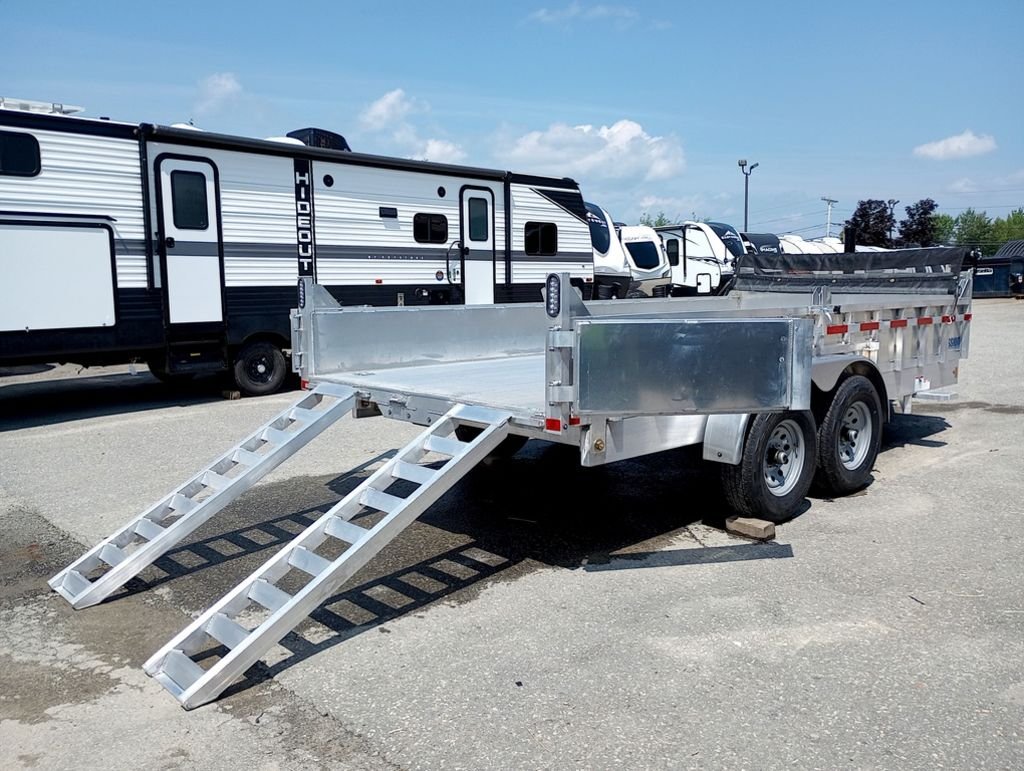
| Decking | Extruded aluminum, 6 in. filler board slot |
| Axle Configuration | (2) 7,000 lb leaf-spring (upgraded from standard 6K) |
| Brakes | Electric on both axles |
| Wheels | 16 in. silver mod |
| Coupler | 2-5/16 in. ball |
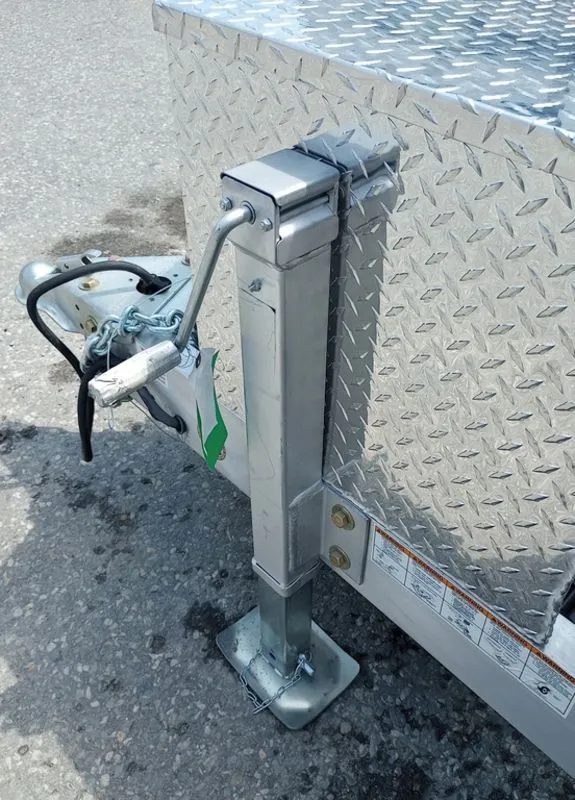
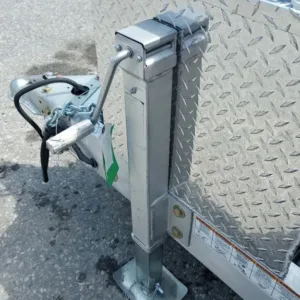
| Jack | 8K drop-leg |
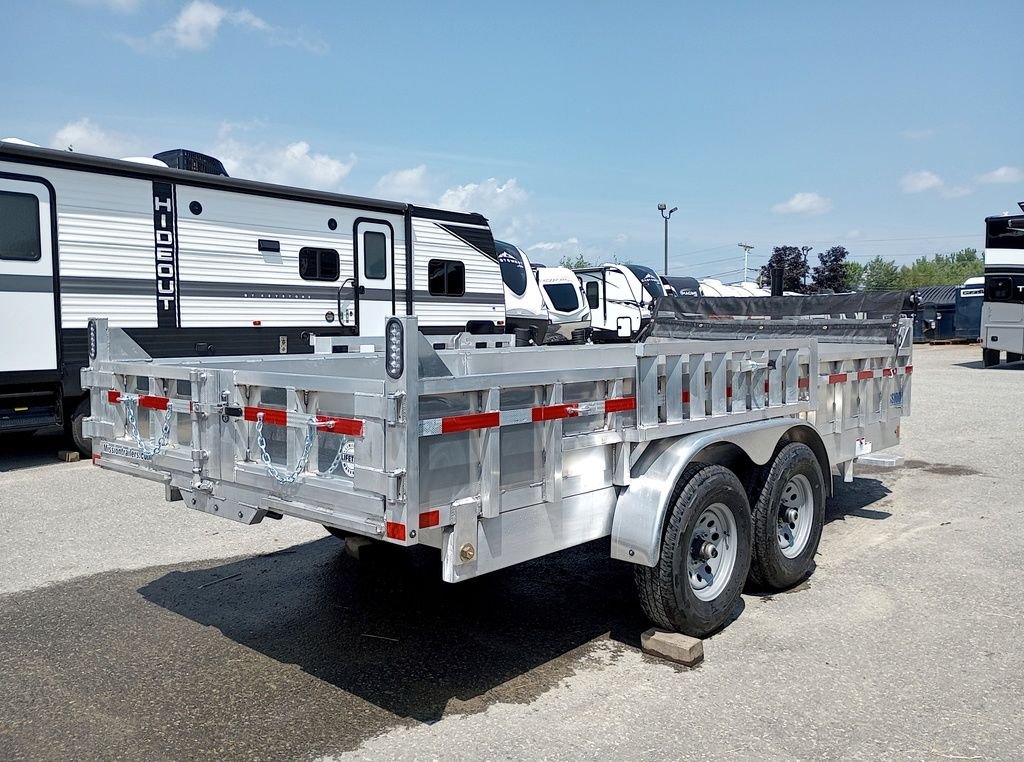
| Safety Chains | (2) |
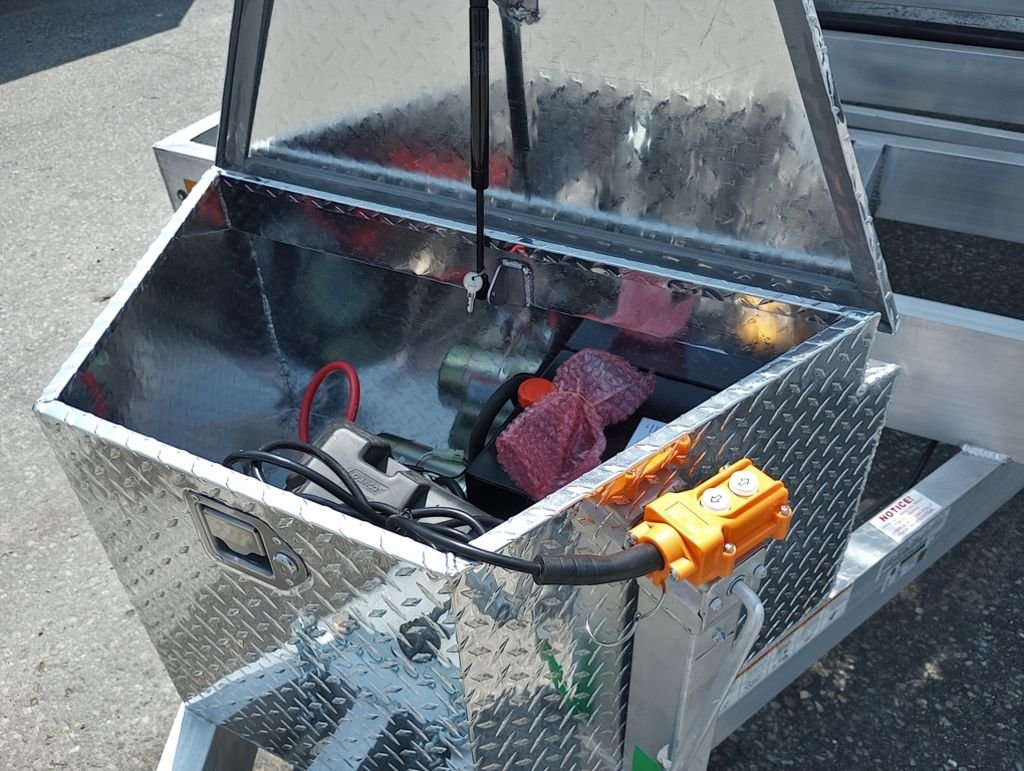
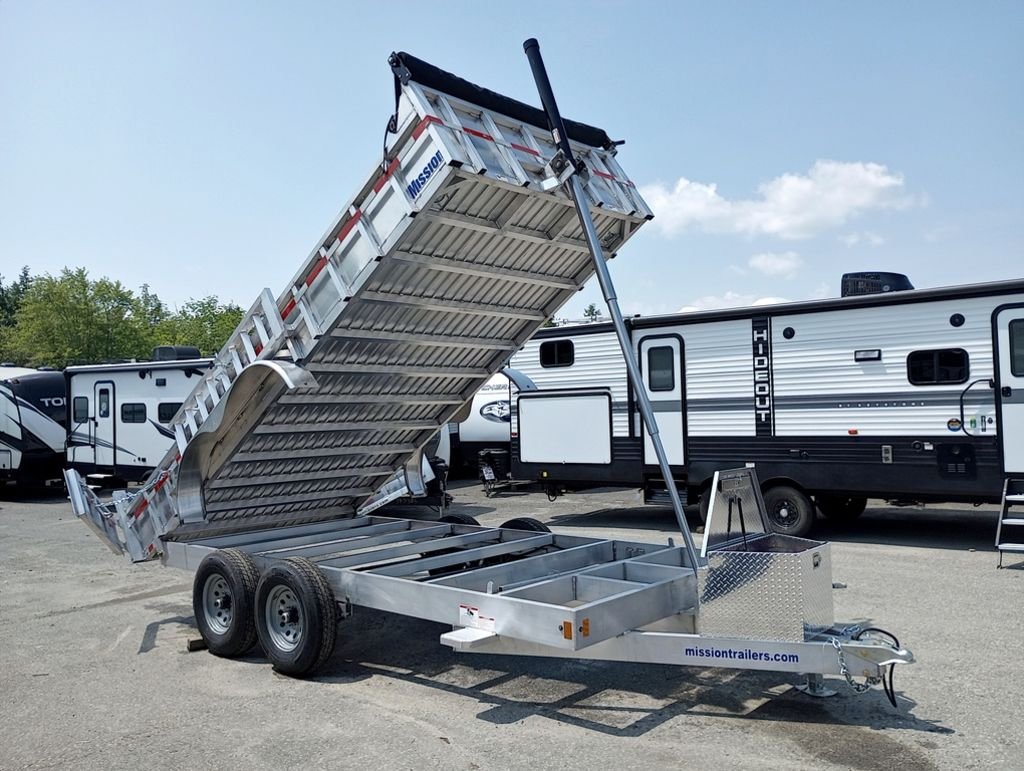
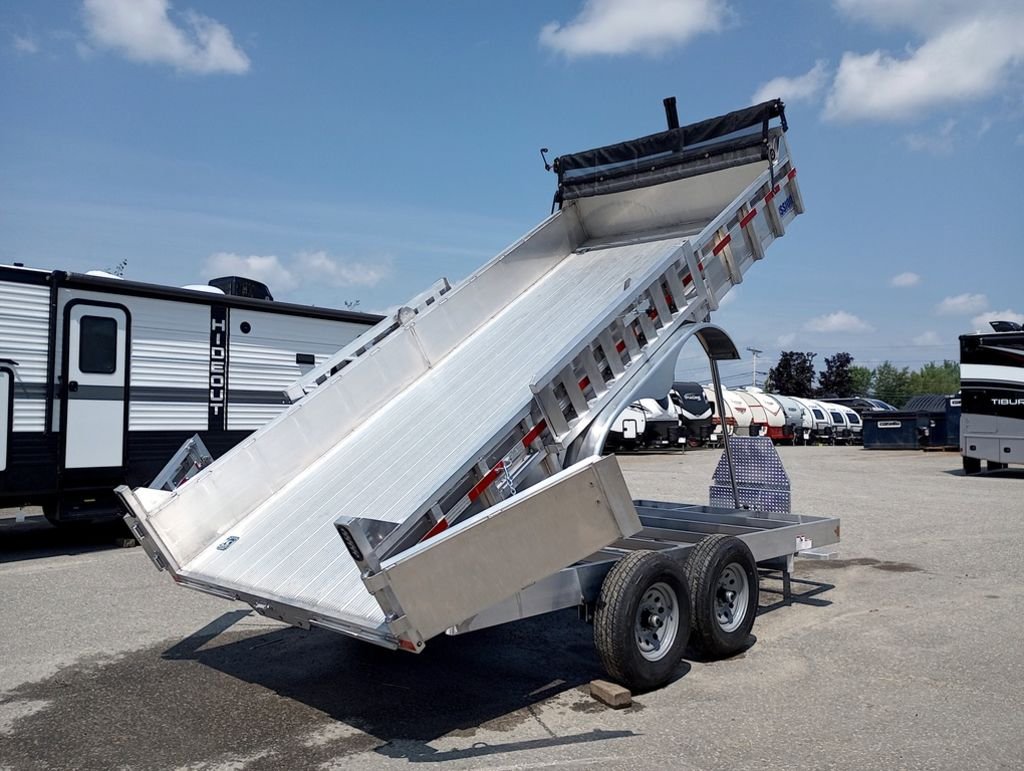
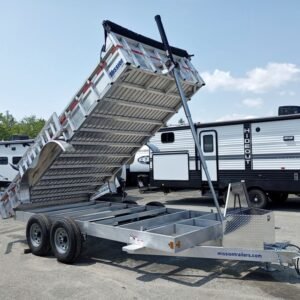
| Hydraulic System | 12V front hoist |
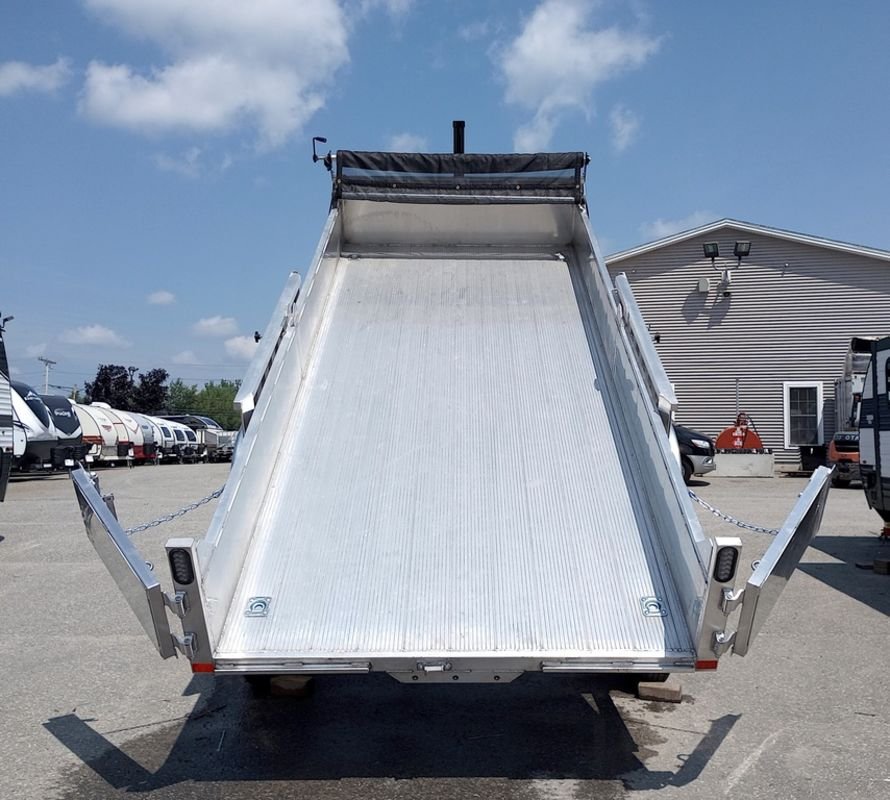
| Doors | Rear swing-open barn doors |
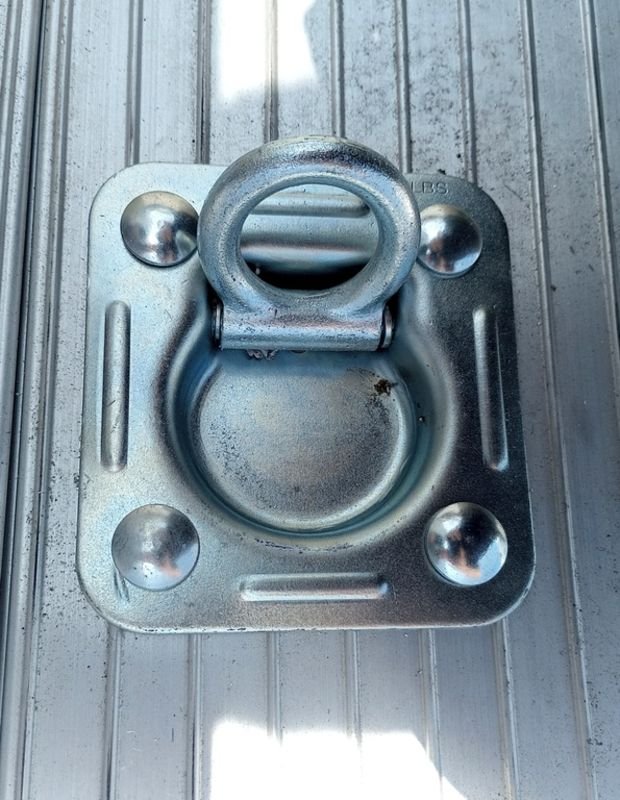
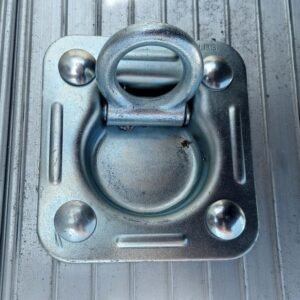
| Tie-Downs | (4) 5K recessed HD D-rings |
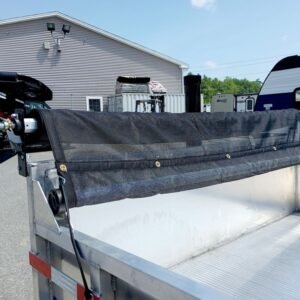
| Tarp | Canvas tarp kit |
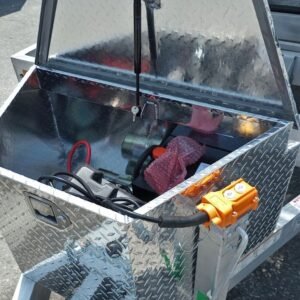
| Toolbox | Diamond plate tongue-mount |
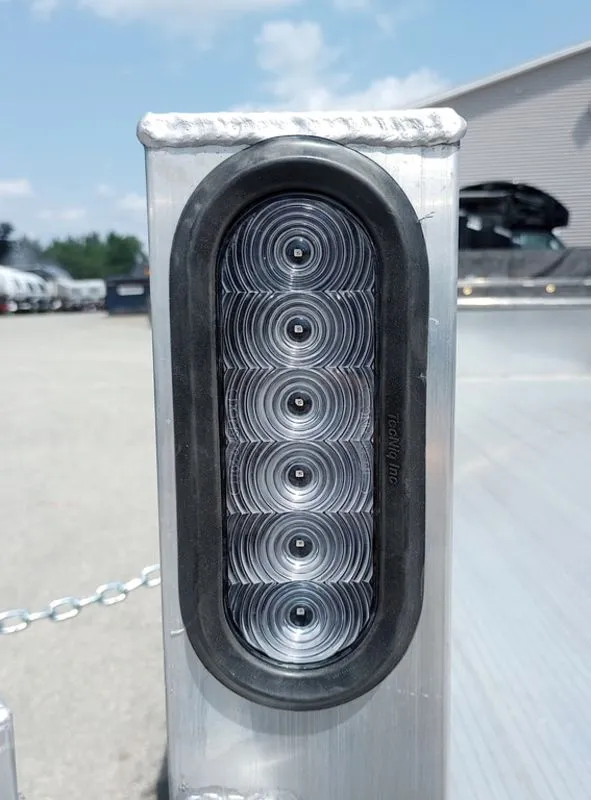
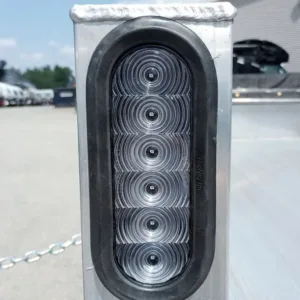
| Lighting | LED marker plus exterior LED lighting |
| Year | 2026 |
| Manufacturer | Mission Trailers |
What Can You Haul With This Trailer?
The 14,000 lb GVWR rating gives this Mission aluminum dump 11,351 pounds of usable payload after subtracting the trailer’s 2,649 lb dry weight. That handles:
- Up to 4 cubic yards of crushed stone or gravel (one yard weighs roughly 2,800 pounds depending on moisture)
- 5 to 6 yards of mulch or topsoil for landscape jobs
- A loaded mid-frame skid steer plus attachments (Bobcat S70 = 4,400 lb empty, leaves room for buckets and forks)
- Demolition debris from a residential bathroom, kitchen, or roof tear-off
- Up to 8,000 to 9,000 pounds of asphalt millings or RAP for paving prep
- Salt and ice-melt for winter snow operations, where the all-aluminum frame really earns its keep
For wet aggregate, manure, or sticky clay, the front-hoist hydraulic dump plus aluminum’s smoother interior surface clears loads faster than steel, with less material left clinging to the bed.
Aluminum vs Steel Dump Trailers
Steel dump trailers are 25 to 30 percent heavier than aluminum equivalents, which means lower payload at the same GVWR and worse fuel mileage on the tow vehicle. More importantly, steel rusts. Salt, deicing chemicals, fertilizer, manure, wet aggregate, and demolition debris with moisture all attack the steel frame and bed. A salt-belt steel dump used for plowing operations typically corrodes through within 5 to 7 years even with regular wash-downs. The Mission 7×16 14K aluminum frame stays clean for the working life of the trailer. There is no paint to chip, no rust to spread, and the resale value at year 10 is still meaningful.
Free Nationwide Delivery
Most dump trailer dealers add 400 to 1,500 dollars for delivery once you are outside their state. PrimeLoad runs a flat-fee included model: free delivery to all 50 US states, no exceptions, no fuel surcharges. Most See our Shipping Policy for zone-specific transit times by region. The driver hands over the title, keys, and bill of lading at the curb. Full shipping policy covers Hawaii and Alaska on a case-by-case basis.
Frequently Asked Questions
Does the aluminum bed handle wet salt and chemicals?
Yes. That is the primary reason buyers choose the aluminum option over steel. Steel dump trailers used for salt typically last 5 to 7 years before corrosion eats the frame. Aluminum stays clean for the working life of the trailer. Wash with fresh water after each salt run and you will see zero pitting.
What is the actual usable payload?
14,000 lb GVWR minus 2,649 lb dry weight equals 11,351 lb usable payload. The federal CDL threshold is 26,000 lb combined gross vehicle weight, so a half-ton or three-quarter-ton pickup tow vehicle keeps a fully loaded trailer well under that limit.
Standard 6K axles or upgraded 7K axles?
This trailer ships with the upgraded (2) 7,000 lb leaf-spring axles, the same configuration used on commercial-fleet rigs. Standard Mission 7×16 14K trailers come with (2) 6K braked axles, which is sufficient for the 14,000 lb GVWR but leaves less margin under load. The 7K upgrade adds tow stability and brake authority, especially on grades and in heavy stop-and-go.
How long will the hydraulic system last?
The 12V hydraulic pump and cylinders Mission uses are industry-standard with widely available replacement parts. With proper maintenance (annual fluid change, keep the battery charged, lubricate the cylinder rod), expect 10 to 15 years of service in moderate-use applications and 7 to 10 years in heavy daily commercial use.