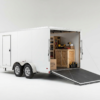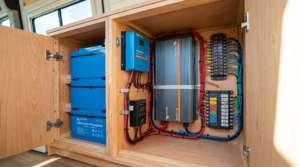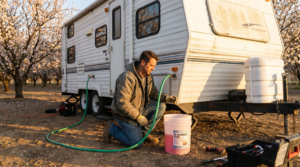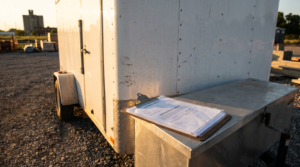
The new vs used trailer decision is more nuanced than most buyers realize. Trailers don\’t depreciate like cars; they depreciate like commercial equipment. The first 2 years lose 20 to 30 percent of value, then depreciation flattens out. Used trailers in the 2 to 5 year range often represent the best value-per-dollar in the market.
This guide walks through depreciation curves, warranty differences, inspection requirements, financing differences, and gives you a clear answer for your specific situation.
How Trailers Actually Depreciate
Trailers retain value better than cars and trucks because they have:
- Simpler mechanical systems (no engine, transmission, computer modules)
- Limited model-year visual changes (a 2020 utility trailer looks nearly identical to a 2024 model)
- Straightforward repair (everything is bolted, welded, or riveted; no proprietary parts)
- Predictable wear patterns (tires, axles, lights, brakes are the only routine wear items)
Typical depreciation curve for a 7×14 utility trailer purchased new at $4,500:
- Year 1: $3,800 (16 percent depreciation)
- Year 2: $3,400 (24 percent total)
- Year 3: $3,100 (31 percent total)
- Year 5: $2,700 (40 percent total)
- Year 7: $2,400 (47 percent total)
- Year 10: $2,000 (56 percent total)
The steepest depreciation hits in the first 2 years. After year 5, prices flatten and a well-maintained trailer holds value reasonably well.
The Best-Value Zone: 2 to 5 Years Old
Trailers 2 to 5 years old offer the best balance of price and remaining service life. The first owner absorbed the steep early depreciation. The trailer is still well within its useful service life. Wear items (tires, brakes, lights) are easy to inspect and replace.
For a $4,500 new trailer, the 3-year-old equivalent costs about $3,100 used. That\’s $1,400 saved (31 percent of original price). Apply $300 to wear-item refresh (tires, brake check, light bulbs) and you\’re into a near-new condition trailer for 76 percent of the new price.
When New Makes Sense
Manufacturer warranty
New trailers come with 1 to 5 year structural warranties depending on manufacturer (Jayco RV: 2 years; most cargo/utility brands: 1 year frame, 5 year axle). Used trailers may have transferable warranty if within original term, but the second owner typically gets less coverage.
Specific build options
If you need a specific size, color, or option package not available used, new is the only path. Custom specs (extended deck length, special ramp configurations, electrical packages) are typically only available on new builds.
Financing rates
New trailer financing rates are typically 0.5 to 1.5 percent lower than used trailer financing. On a $25,000 RV trailer financed for 10 years, this delta is $1,000 to $3,000 over the loan term.
Tax write-offs (commercial buyers)
Section 179 deduction allows commercial buyers to deduct the full purchase price of new equipment in year one (within IRS limits). Used trailers qualify under different bonus depreciation rules, but the year-one tax benefit is often less. Talk to your accountant before the year ends.
You plan to keep the trailer 10+ years
Over a 10+ year ownership horizon, the new trailer\’s warranty period and absence of unknown previous-owner damage matters less than over a shorter ownership. New makes more sense for long-term keepers than for short-term users.
When Used Makes Sense
Tight budget for the size you need
If a new 7×16 cargo trailer is $9,500 and your budget is $7,000, a 3-year-old 7×16 in good condition gets you the size you need. Buying smaller new vs the right size used is usually the wrong trade.
Light-use scenarios
If you\’ll use the trailer 5-10 trips per year, the difference between a new trailer and a 5-year-old trailer over the next 5 years of light use is minimal. Used makes economic sense.
Commercial fleet additions
Adding to an existing trailer fleet often makes more sense used. The fleet already has the warranty coverage on existing units; the marginal trailer doesn\’t need premium new-trailer warranty.
Specific older configurations no longer made
Some older trailer configurations (specific deck heights, specific ramp angles, specific brand variants) are no longer manufactured. If you need a specific older spec for compatibility with existing equipment, used is your only option.
Used Trailer Inspection Checklist
If you go used, inspect carefully before buying:
- Frame: Look for rust, cracks, weld failures, or paint covering up structural damage. Check the frame at the tongue, axles, and rear (highest stress points).
- Axles and suspension: Wear bushings should be tight (no play in the leaf-spring shackle bushings). Inspect axle for bends or impact damage.
- Wheels and tires: Tire age (DOT date code on sidewall) more important than tread depth. Trailer tires age out at 6 to 8 years regardless of mileage. Replacement cost: $150 to $400 for tandem axle.
- Brakes: Apply brake controller, listen for activation. Wheel-side magnets should engage cleanly. Drum brakes should not show heavy scoring.
- Wiring and lights: Test all lights (running, brake, turn). Inspect ground points for corrosion. Replace ground bolts if heavily oxidized.
- Floor: Walk the entire deck. Soft spots indicate water damage. Check under the trailer for floor seal leaks and water staining.
- Hitch coupler: Latching mechanism should fully close and lock. No cracks at coupler welds.
- Documentation: Title in seller\’s name, no liens, VIN matches the title and trailer plate.
Financing New vs Used
New trailer financing through dealer networks often runs 6 to 9 percent for personal use, 5 to 8 percent for commercial use (rates as of late 2025/early 2026). Loan terms typically 5 to 10 years.
Used trailer financing through banks and credit unions runs 7 to 11 percent for personal use, 6 to 10 percent for commercial. Loan terms typically 4 to 7 years (older trailers harder to finance for long terms).
Cash purchase eliminates the rate question. For trailers under $10,000, many buyers pay cash because the financing fees and rates outweigh the convenience.
Bottom Line: Use Case Driven Decision
Buy new if: commercial user with Section 179 tax benefit, need specific build options, plan to own 10+ years, want full manufacturer warranty, financing rates favor new.
Buy used (2 to 5 years old) if: tight budget for the size you need, light use case, adding to existing fleet, willing to do thorough inspection. Best value-per-dollar zone.
Buy used (5+ years old): only with thorough inspection, low expected service life remaining, very specific use case where new is overkill, or as a temporary solution while saving for new.
New vs Used Trailer Questions
Are used trailers a good deal?
Trailers 2 to 5 years old offer the best value-per-dollar. The first owner absorbed the steep early depreciation, the trailer is still within useful service life, and wear items (tires, brakes) are easy to inspect and replace. Past 5 years, value depends heavily on condition.
How much do trailers depreciate?
Year 1: 15 to 20 percent. Year 3: 30 to 35 percent. Year 5: 40 percent. Year 10: 50 to 60 percent. Trailers depreciate slower than cars/trucks because they have simpler mechanical systems and limited model-year visual changes.
Do used trailers have warranties?
New trailers come with manufacturer warranties (1 to 5 years depending on brand). Used trailers may have transferable warranty if within original term and the manufacturer allows transfer. Most used buyers buy without warranty and budget for any major repairs.
Should I buy a new or used cargo trailer?
For commercial daily use with 10+ year horizon: new with manufacturer warranty. For occasional homeowner use under 1,500 miles/year: used (2 to 5 years old) gets you good value with minimal compromise.
What should I inspect on a used trailer?
Frame integrity (no rust-through, no weld cracks). Axle and suspension. Tire age (DOT date code, replace at 6 to 8 years regardless of tread). Brakes. Wiring. Floor for water damage. Hitch coupler. Documentation (title, no liens). Take 30 to 45 minutes for a thorough walkthrough.
Is used trailer financing harder to get?
Slightly. Banks finance used trailers but typically at 1 to 2 percent higher rates and shorter loan terms (4 to 7 years vs 7 to 10 for new). For trailers older than 7 years, financing options narrow further.
Related Guides and Inventory
Ready to buy? Get a free quote within 24 hours, or call us at (360) 560-5472.