Trailer insurance is more confusing than it should be. Many trailer owners are underinsured because their tow vehicle policy has limitations they don’t know about. Others overpay for coverage they don’t need. This guide explains what insurance actually covers, what you actually need, and what real coverage costs.
Your Auto Policy Probably Already Covers Some of This
Most personal auto insurance policies include limited trailer liability coverage automatically. When you tow a trailer, your auto policy’s liability extends to cover damage caused by the trailer (rear-ending another car, swiping a parked vehicle, hitting property).
What auto policy coverage typically includes
- Liability for damage caused by the trailer to other vehicles or property
- Liability for injury caused by the trailer
- Coverage while actively towing (not while parked or in storage)
What auto policy coverage typically does NOT include
- Damage to the trailer itself (your trailer, hit by another driver: not covered)
- Theft of the trailer
- Damage to cargo on the trailer
- Coverage while the trailer is parked or in storage
- Coverage above your auto policy’s liability limits
For most trailer owners, the auto policy’s liability coverage is the floor, not the ceiling, of what they need.
Trailer-Specific Insurance Coverage Types
Liability coverage (separate trailer policy)
Some commercial trailer policies offer dedicated liability coverage with higher limits than your auto policy. Useful for commercial users who need $1 million+ liability coverage that exceeds typical personal auto limits.
Cost: $200 to $600 per year for a standalone trailer liability policy with $1 million coverage.
Physical damage coverage (the trailer itself)
Covers damage to the trailer from accidents, weather, vandalism, theft, or fire. This is the most overlooked coverage. Without it, if your trailer is damaged or stolen, you absorb the full replacement cost.
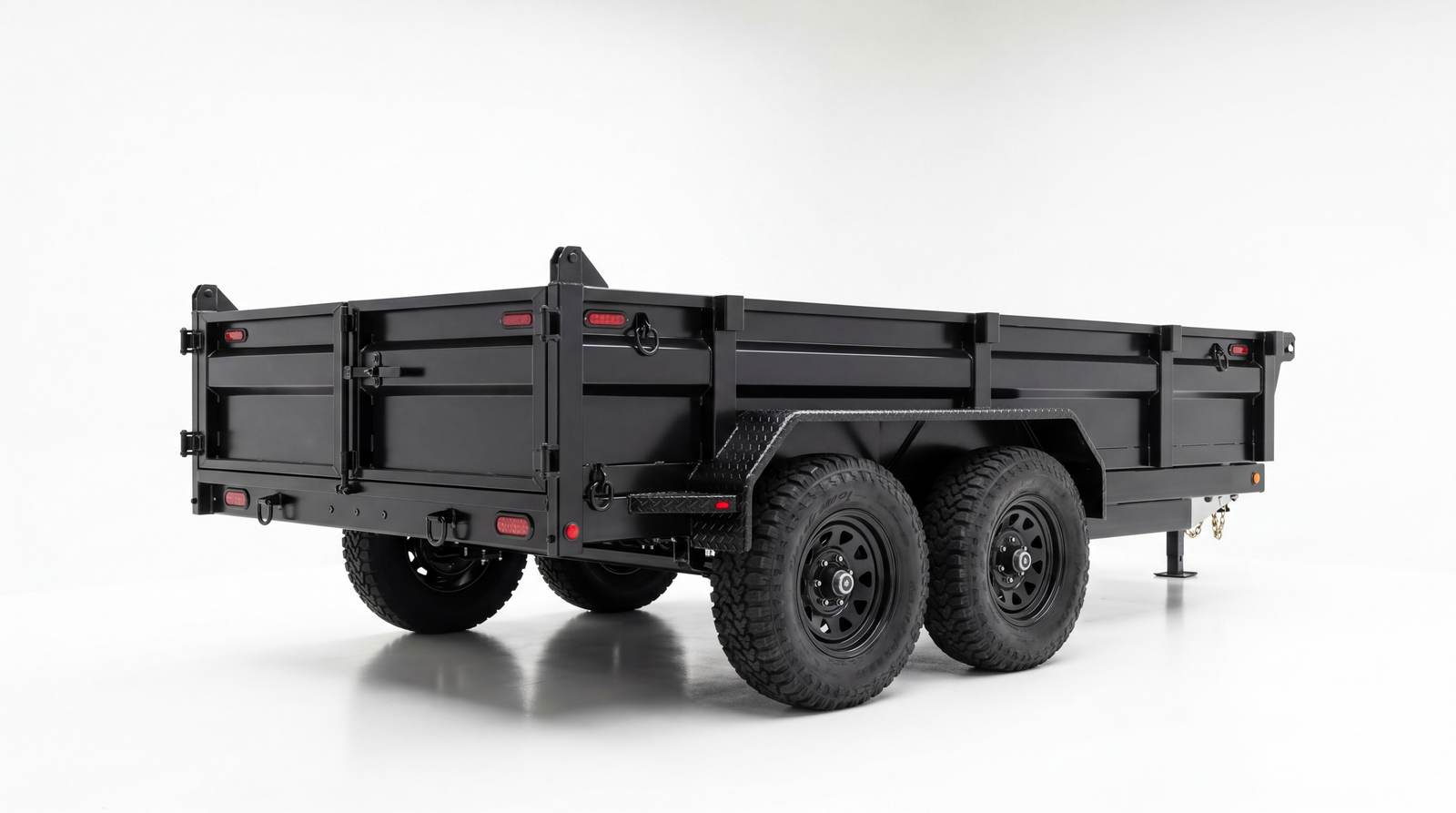
Cost: $80 to $300 per year depending on trailer value, deductible, and coverage limit. A $7,000 dump trailer costs $120 to $200/year for typical comprehensive coverage with a $500 deductible.
Cargo insurance
Covers damage to cargo being hauled in the trailer. Critical for commercial users (contractors, transporters, deliverers) who haul valuable cargo. Cargo insurance is a separate policy from trailer physical damage insurance.
Cost: varies wildly based on cargo value. A $50,000 cargo limit policy runs $400 to $1,500 per year for general commercial use; specialty cargo (auto transport, hazmat) costs more.
Commercial use coverage
Standard auto and trailer policies typically exclude commercial use. If you use your trailer for business (contractor work, hauling for hire, delivery), you need commercial coverage. Personal policies’ liability coverage doesn’t apply to commercial use.
Cost: 30 to 70 percent more than equivalent personal policies. Plus higher liability limits typically required.
Commercial vs Personal Use: The Distinction Matters
Insurance companies classify trailer use strictly. The difference between personal use and commercial use is whether you’re paid for the work you’re doing.
Personal use (covered by standard policies)
- Hauling your own ATVs, motorcycles, or boat for recreation
- Helping a family member move
- Hauling your own landscape waste or DIY project materials
- Taking your travel trailer on vacation
Commercial use (requires commercial coverage)
- Any landscape contractor work
- Any contractor or trades work that uses the trailer to haul tools or materials
- Auto transport for paying customers
- Towing for hire (delivery, moving services)
- Cargo transport for paying customers
The grey zone: hobbyist activities that occasionally generate income (selling restored cars, occasional helping neighbors with their moves for cash) typically count as commercial use under most policies. When in doubt, talk to your insurance agent before assuming personal coverage applies.
What Coverage Most Buyers Actually Need
Recreational/personal use trailer (boat trailer, ATV trailer, occasional moving)
Auto policy liability extension covers most scenarios. Add comprehensive trailer coverage ($100 to $200/year) for theft and weather damage. Total annual insurance cost: $100 to $200/year above your auto policy.
Hobbyist car hauler or RV trailer
Add specific trailer policy with comprehensive coverage. Total annual cost: $200 to $500/year.
Active landscape contractor
Commercial auto policy (covers tow vehicle for commercial use), commercial trailer liability (separate policy or rider), trailer physical damage coverage, and cargo coverage if you haul valuable equipment. Total annual cost: $1,500 to $3,500/year for trailer-specific coverage on top of commercial auto.
Auto transport business
Specialty commercial cargo policy (high coverage limits, specific to vehicle transport), commercial trailer liability, trailer physical damage. Total annual cost: $3,500 to $8,000/year.
Heavy equipment hauler
Commercial DOT coverage (required by FMCSA for commercial motor vehicles), high-limit cargo coverage, trailer physical damage. Total annual cost: $4,000 to $12,000/year.
Regional Cost Variations
Trailer insurance costs vary by state. High-cost states (CA, FL, NJ, NY) run 30 to 60 percent higher than low-cost states (VT, NH, ME, MT). Within states, urban vs rural makes a difference (urban higher).
Northern New England specifically: trailer insurance is among the lowest-cost in the country due to low theft rates and low accident rates. A typical $7,000 commercial dump trailer with comprehensive coverage runs $120 to $180/year.
What Happens When You File a Claim
Most trailer insurance claims fall into three categories:
Theft
File police report immediately. Notify insurance carrier within 24 to 72 hours. Provide trailer VIN, registration, and last known location. Typical settlement timeline: 30 to 60 days. Most policies pay actual cash value (replacement cost minus depreciation).
Weather/storm damage
Document damage with photos and video before any cleanup or repair. File claim within 30 to 60 days of damage. Carrier may send adjuster to inspect or accept written estimate from a qualified repair shop. Settlement typically within 14 to 45 days.
Accident damage
If accident is your fault: file under your liability coverage. If accident is another driver’s fault: file under their liability or your uninsured motorist coverage. Documentation, police report, and photos are essential. Settlement typically takes 30 to 90 days.
Ways to Reduce Insurance Cost
- Higher deductibles (going from $250 to $1,000 deductible saves 15 to 30 percent in premium)
- Bundle with auto and home policies (typically saves 10 to 20 percent across all policies)
- Park in secured/covered storage (theft risk reduction can save 10 to 15 percent)
- Install GPS tracker (some carriers offer 5 to 15 percent discount for trackable trailers)
- Anti-theft locks (puck locks, hidden hasp locks) often qualify for small discounts
- Annual payment vs monthly (pay-in-full saves 5 to 10 percent vs monthly billing)
Trailer Insurance Questions
Does my auto insurance cover my trailer?
Partially. Most auto policies cover liability for damage caused by the trailer to others while you’re actively towing. They do NOT cover damage to the trailer itself, theft, cargo damage, or coverage while parked. For full protection, you need separate trailer-specific coverage.
Do I need insurance on a trailer that's parked?
Yes, if you want coverage for theft or weather damage while it’s in storage. Auto policy liability coverage typically does NOT extend to a parked trailer. Comprehensive trailer coverage (about $100 to $200/year) covers parked-trailer scenarios.
How much does trailer insurance cost?
Recreational use: $100 to $200/year above auto policy. Hobbyist use: $200 to $500/year. Active landscape contractor: $1,500 to $3,500/year. Auto transport: $3,500 to $8,000/year. Cost varies by trailer value, coverage limits, deductibles, and use case.
What's the difference between commercial and personal trailer insurance?
Commercial coverage is required if you use the trailer for business (any paid work). Standard personal policies exclude commercial use entirely. Commercial coverage costs 30 to 70 percent more than personal coverage and typically includes higher liability limits.
Should I insure cargo separately?
For commercial users hauling valuable cargo: yes. Trailer physical damage coverage covers the trailer itself but not the cargo on it. Cargo insurance is a separate policy that covers cargo damage during transit. Cost: $400 to $1,500/year for $50,000 cargo coverage.
Can I get insurance on a used trailer?
Yes. Most insurance carriers cover used trailers with the same policy types as new trailers. Some require an inspection or photos for trailers above a certain value or age. Verify with your carrier before assuming coverage applies.
Related Guides and Inventory
Ready to buy? Get a free quote within 24 hours, or call us at (360) 560-5472.