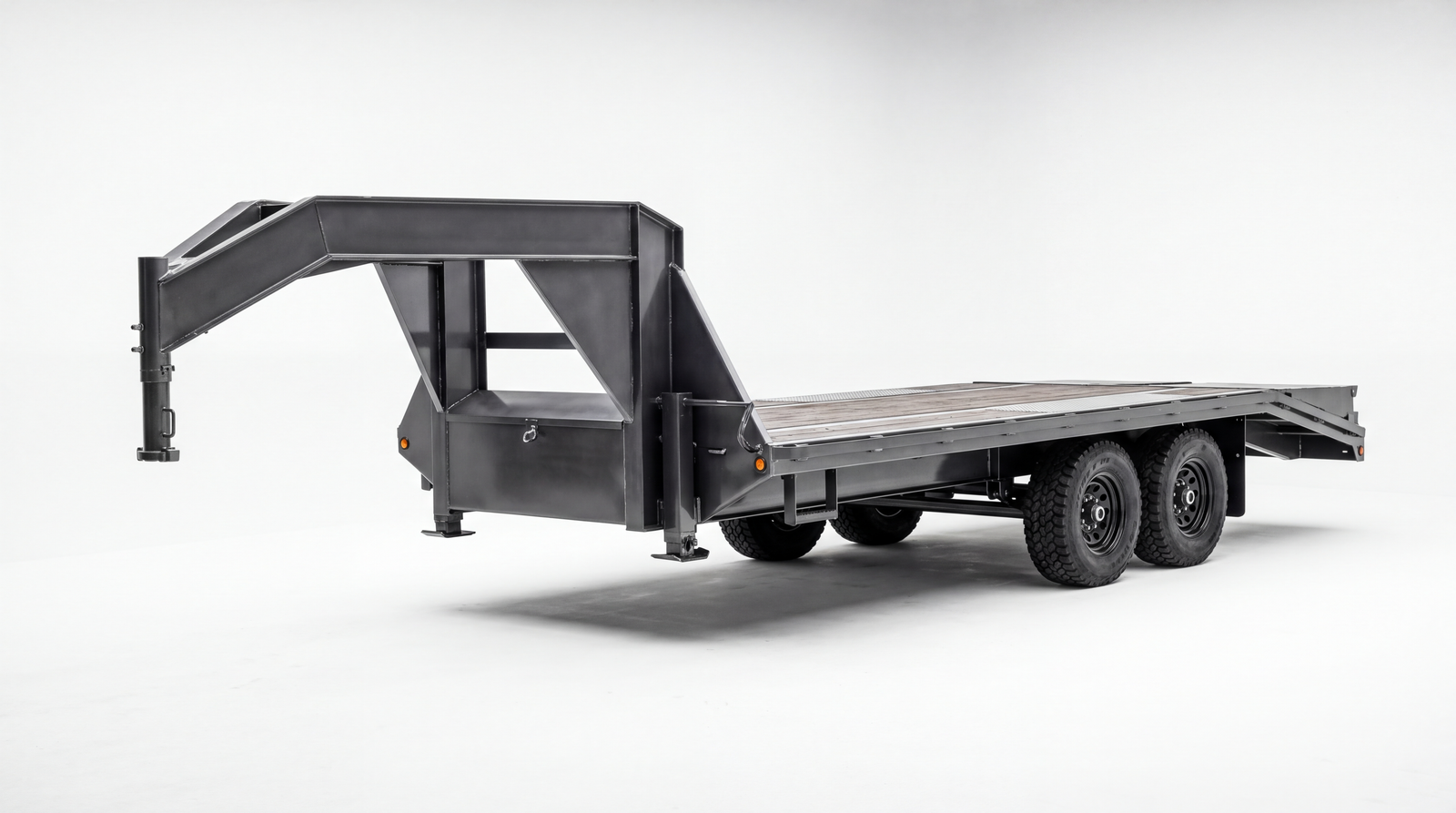
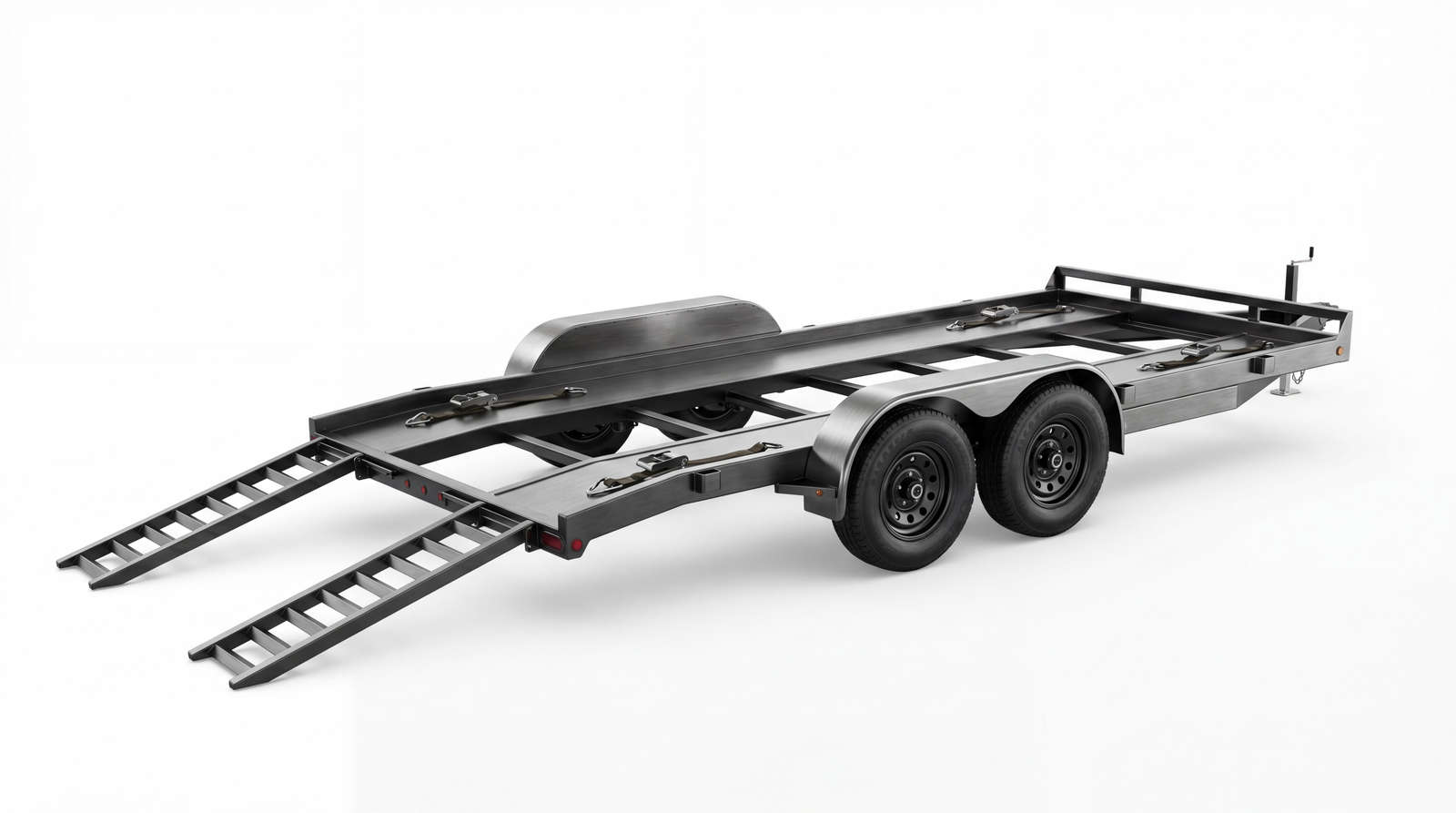
Open car haulers come with two basic deck options: treated wood (typically pressure-treated 2×6 or 2×8 planks) or steel (typically diamond-plate or smooth galvanized steel). Both work. Each has clear strengths and weaknesses depending on use case. This guide gives you the real-world comparison so you can pick the right one for your specific situation.
Wood Deck: Pros
Gentler on tires
Wood gives slight cushioning under tire pressure. For valuable vehicles with expensive tires (race compounds, classic car tires, low-profile performance tires), wood reduces wear from prolonged loading and storage on the trailer.
Gentler on paint
Wood doesn\’t transmit road vibration to the vehicle the way steel does. Slight flex in wood deck planking absorbs road harshness, reducing micro-vibration damage to vehicle paint, trim, and undercoating during long-distance hauls.
Easier to repair
Damaged wood planks bolt or screw out and replace in 30 minutes per plank. Total deck refresh costs $300 to $700 in materials over 5 to 8 years (replace planks as they age out, not all at once). DIY-friendly.
Better grip when wet
Wet wood maintains tire grip dramatically better than wet steel. For loading vehicles in rain or after car washes, wood is markedly safer.
Lower thermal expansion
Wood expands and contracts less aggressively than steel with temperature changes. Long-term frame stress from thermal cycling is lower.
Wood Deck: Cons
Shorter service life
Wood planks last 5 to 10 years before requiring replacement. Steel deck typically lasts 15 to 20+ years. Total cost of ownership over 15 years includes 1 to 2 deck refresh cycles vs 0 for steel.
Treatment maintenance
Wood needs annual treatment (UV protectant, water sealer) to prevent rapid degradation. Treatment costs $50 to $100/year in materials plus 2 to 3 hours of application time. Skipping maintenance accelerates wood breakdown.
Heavier per square foot
Pressure-treated wood weighs 2.5 to 3.5 lbs per board foot. A typical 7×18 wood deck weighs 600 to 800 lbs. Steel deck on the same trailer weighs 350 to 500 lbs. Lower trailer weight means slightly better fuel economy and more available cargo capacity.
Susceptible to rot at fastener points
Wood absorbs water at screw and bolt holes. Over years, rot develops at fastener points even on properly treated wood. This is why wood decks need plank replacement vs full deck failure.
Higher upfront cost (sometimes)
Premium wood-deck car haulers (Premier, CAM Superline wood-deck variants) often cost 5 to 10 percent more than steel-deck equivalents. The premium reflects the higher labor cost of wood plank installation vs welding steel deck panels.
Steel Deck: Pros
Long service life
Steel deck lasts 15 to 20+ years with minimal maintenance. No plank replacement cycles. Total cost of ownership over 15 years can be lower than wood despite similar upfront cost.
Higher load capacity per square foot
Steel deck handles point loads (concentrated weight from heavy machinery, jack stands, or loaded racing equipment) better than wood. Wood deck planks can crack under concentrated loads above 1,500 lbs per square foot. Steel handles 5,000+ lbs per square foot without deformation.
Lower long-term maintenance
Steel deck requires occasional rust treatment and minor weld repairs over 10+ years. No annual treatment cycle. Total maintenance cost: $200 to $500 over 10 years vs $1,000 to $1,500 for wood.
Lower weight (most steel decks)
Galvanized steel deck panels typically weigh 350 to 500 lbs vs 600 to 800 lbs for wood. Lighter deck means better fuel economy and more available cargo capacity.
Better fire resistance
Steel won\’t catch fire from hot exhaust, leaking fuel, or shop fires. Wood can ignite from prolonged exposure to hot exhaust pipes (race cars after track time) or shop fires. Negligible for most use but worth noting for race-car transport.
Steel Deck: Cons
Slipperier when wet
Wet steel deck loses tire grip. Loading a car in rain on steel deck is meaningfully more dangerous than wood. Most steel-deck buyers add textured grip strips at tire-loading positions to address this.
Harsher ride for cargo
Steel transmits road vibration directly to the cargo. For valuable vehicles on long hauls, this can cause micro-vibration damage to paint, trim, and undercoating. Race teams often add wood blocks or rubber matting between vehicle tires and steel deck for vibration isolation.
Higher thermal expansion
Steel expands and contracts more with temperature changes than wood. Frame stress from thermal cycling is higher over decades of service.
Harder to modify
Adding tie-down points, wheel chocks, or accessories to a steel deck requires welding or drilling. Wood deck additions are simpler (lag bolt into the wood).
Slower to repair structural damage
Bent or cracked steel deck panels require professional welding repair ($300 to $1,200 typical). Wood plank damage is DIY-fixable.
Recommendation by Use Case
Buy wood deck if:
- You haul classic, restored, or valuable vehicles where paint protection matters
- You haul race cars or track-day vehicles with expensive tires
- You load vehicles in wet conditions regularly
- You want DIY-repairable deck
- You\’re willing to do annual treatment maintenance
- Your ownership horizon is 5 to 12 years
Buy steel deck if:
- You haul commercial vehicles where deck longevity matters more than cargo gentleness
- You haul construction equipment with concentrated point loads
- You\’re running a daily commercial transport business
- You want minimal maintenance over the trailer\’s service life
- Your ownership horizon is 15+ years
- Lower trailer weight is a priority for fuel economy
Hybrid Options
Some manufacturers offer hybrid configurations: steel frame with wood deck planks (the most common premium configuration), or steel deck with wood ramps (cost-effective compromise). The steel-frame-wood-deck combination gives you the best of both worlds: durable structural frame with cargo-gentle deck surface. Most quality car haulers in the $4,000 to $8,000 range use this configuration.
Real Long-Term Cost Comparison
15-year ownership: 7×18 wood-deck car hauler
- Upfront cost: $4,500
- Annual treatment: $75/year x 15 = $1,125
- Plank replacement (year 8): $500
- Plank replacement (year 14): $500
- Resale at year 15: $1,200
- Total 15-year net cost: $5,425
15-year ownership: 7×18 steel-deck car hauler
- Upfront cost: $4,200
- Rust treatment + minor repair: $400 over 15 years
- Resale at year 15: $1,400
- Total 15-year net cost: $3,200
Steel deck nets out $2,225 cheaper over 15 years for general-purpose use. For valuable-cargo applications where wood\’s gentleness justifies the premium, the math shifts: protecting one paint job ($2,000+ repaint) over 15 years pays for the wood deck difference.
Wood vs Steel Deck Questions
Which lasts longer, wood or steel deck?
Steel deck typically lasts 15 to 20+ years. Wood deck typically lasts 5 to 10 years before plank replacement. Steel\’s service life is roughly double wood\’s, though wood\’s replaceable planks make it repairable indefinitely.
Is wood deck better for race cars?
Yes. Wood\’s slight flex absorbs road vibration that would otherwise transmit to the vehicle. For race cars with sticky tires and aerodynamic body panels, wood reduces vibration damage during long-distance hauls. Most race transport teams prefer wood deck.
Can I add tie-downs to a steel deck?
Yes, but it requires welding or drilling. Adding D-rings or stake pockets to steel deck costs $200 to $600 in welding labor depending on configuration. Wood deck modifications are simpler (lag bolt into the planks).
How often should I treat a wood-deck car hauler?
Annual treatment is standard. UV protectant + water sealer applied once per year (typically in spring) extends wood deck life from 5 to 7 years up to 10 to 12 years. Skipping treatment accelerates plank degradation significantly.
Wood deck or steel deck for an open car hauler?
For valuable, classic, or restored cars: wood. For commercial daily-use car transport: steel. For occasional homeowner or hobbyist use: wood typically wins for handling/grip reasons. For 15+ year commercial ownership: steel for lower lifetime cost.
Can I replace wood deck planks myself?
Yes. Wood plank replacement is DIY-friendly. Remove screws/bolts holding the plank, slide out, slide in replacement, re-install fasteners. Takes 30 minutes per plank. Materials cost $20 to $40 per plank for treated 2×6 or 2×8.
Related Guides and Inventory
Ready to buy? Get a free quote within 24 hours, or call us at (360) 560-5472.